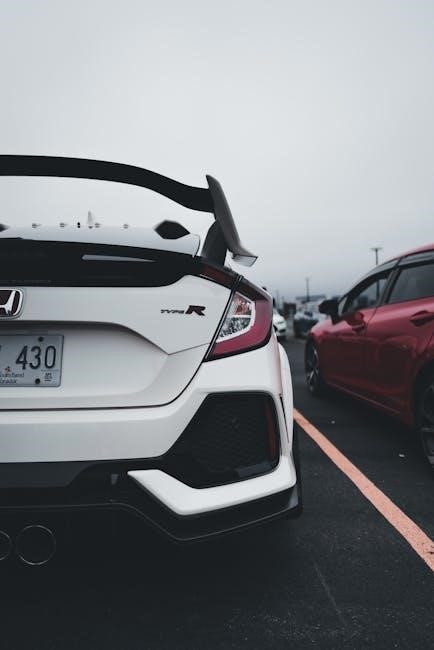
Embarking on a Honda Civic motor swap is a popular modification, driven by enthusiasts seeking increased performance. This guide details the process,
considering compatibility,
components, and potential challenges for a successful upgrade.
For decades, Honda Civic engine swaps have captivated enthusiasts, mirroring the hot-rodding spirit of modifying vehicles for enhanced performance. This practice, gaining traction since the early 1990s, involves replacing the factory engine with a more powerful unit from another Honda model – or even Acura. The appeal lies in unlocking significant horsepower gains without the substantial cost of purchasing a higher-spec vehicle. However, it’s far from a simple bolt-on procedure.
Successful swaps demand meticulous planning, a comprehensive understanding of compatibility, and a willingness to address the numerous supporting modifications required. This guide aims to demystify the process, providing a roadmap for those considering this exciting, yet complex, upgrade path.
Popular Swap Options for Honda Civics
Several engine families consistently rank as popular choices for Civic swaps, each offering a distinct balance of power, cost, and complexity. The B-Series (B16, B18) engines, renowned for their high-revving nature and readily available aftermarket support, remain a favorite. Alternatively, the K-Series (K20, K24) provides substantial power gains, though often requiring more extensive modifications.
For those seeking a more unique and powerful option, the H-Series (H22) presents a compelling, albeit less common, choice. Ultimately, the “best” swap depends on individual goals, budget, and the specific Civic generation being modified.
B-Series Engine Swaps (B16, B18)
B-Series swaps, particularly the B16A and B18C engines, are historically significant and well-documented within the Civic community. These engines offer a noticeable power increase over stock Civic engines, especially in older generations. However, successful implementation requires careful planning. Key considerations include sourcing a complete engine and transmission assembly, addressing engine mounting, and managing the wiring harness.
Aftermarket support for B-Series engines is extensive, simplifying component acquisition. Expect to invest in axles, potentially a new fuel system, and ECU tuning for optimal performance.
K-Series Engine Swaps (K20, K24)
K-Series engine swaps, utilizing the K20 or K24, represent a significant performance upgrade for Honda Civics, offering substantial horsepower gains. These swaps are more complex than B-Series conversions, demanding greater fabrication and specialized parts. Expect to address engine mounting, custom axles, and potentially chassis reinforcement due to the K-Series’ increased power and torque.
Wiring harness integration and ECU tuning are critical for a successful K-Series swap. Aftermarket kits simplify the process, but professional tuning is highly recommended to maximize performance and reliability.
H-Series Engine Swaps (H22)
The H22 engine swap, while less common than B or K-Series, presents a potent option for Civic enthusiasts desiring substantial power. Sourced primarily from the Honda Prelude, the H22 offers a naturally aspirated VTEC experience. However, this swap is notably challenging, requiring extensive modifications to the chassis and drivetrain.
Custom engine mounts, axles, and potentially hood clearance adjustments are essential. Wiring harness integration demands significant expertise, and finding compatible components can be difficult. Despite the complexity, a well-executed H22 swap delivers a unique and powerful Civic.
Assessing Compatibility: Chassis Generations
Determining compatibility between the donor engine and your Civic’s chassis is paramount. Each generation – EG/EH/EJ (1992-1995), EK (1996-2000), and EP/ES (2002-2005) – presents unique challenges. Earlier generations generally offer more straightforward swaps due to simpler wiring and readily available aftermarket support.
Later generations, like the EP/ES, often require more custom fabrication and wiring solutions. Factors like engine bay dimensions, transmission mounting points, and ECU integration vary significantly. Thorough research specific to your chassis is crucial before committing to a swap.
EG/EH/EJ (1992-1995) Swap Considerations
The EG/EH/EJ chassis are favored for swaps due to their relative simplicity and abundant aftermarket support. B-series (B16, B18) engines are particularly popular, often requiring minimal modification for installation. However, H-series (H22) swaps demand more extensive work, including potential firewall modifications.
Wiring is generally manageable, with readily available conversion harnesses. Ensure proper mounting using aftermarket or modified stock mounts. Consider the age of the chassis; rust repair may be necessary before undertaking a swap. These generations offer a good balance of affordability and ease of modification.

EK (1996-2000) Swap Considerations
The EK chassis presents a slightly more complex swap compared to the EG/EH/EJ, but still remains a highly sought-after platform. K-series (K20, K24) swaps are exceptionally popular, offering significant power gains, though requiring more involved modifications like custom axles and potentially strengthened chassis components.
B-series swaps are also viable, often being more straightforward than K-series. Wiring harness integration is generally well-documented. EK Civics often benefit from upgraded suspension and braking systems to match the increased power. Careful planning and quality components are crucial for a reliable outcome.
EP/ES (2002-2005) Swap Considerations
Swapping engines into the EP/ES Civic (2002-2005) presents unique challenges due to its more modern design and increased complexity. K-series swaps are feasible, but require substantial modifications, including custom engine mounts, axles, and potentially firewall adjustments. The EP/ES chassis wasn’t originally designed for the larger K-series engines.
B-series swaps are less common but still possible, often proving more manageable than K-series conversions. Wiring harness integration can be intricate, demanding careful attention to detail. Upgrading the drivetrain to handle the increased power is essential for optimal performance and longevity.
Essential Components for a Motor Swap
A successful Honda Civic motor swap demands more than just the engine itself. A complete engine harness and compatible ECU are crucial for proper operation and tuning. The transmission must be matched to the new engine’s power output and drivetrain configuration. Expect to modify or replace axles, driveshafts, and potentially the rear differential.
Custom engine mounts and adapter plates are often necessary to ensure proper engine placement and alignment. Don’t overlook the cooling system – a high-capacity radiator and potentially an oil cooler are vital for managing increased heat.
Engine Harness and ECU
The engine harness and ECU are the brain and nervous system of your swapped engine. Utilizing the donor engine’s harness is often simplest, but modifications are usually required to integrate with the Civic’s existing systems. Standalone ECUs offer greater tuning flexibility but demand more expertise. Careful wiring is paramount; incorrect connections can cause significant damage.
Consider the ECU’s compatibility with your Civic’s features, like the speedometer and climate control. Proper ECU calibration is essential to optimize performance and ensure engine longevity. Ignoring this step can lead to poor fuel economy and potential engine failure.
Transmission and Drivetrain Modifications
Matching the transmission to the new engine is crucial for optimal power delivery. Often, the donor engine’s transmission is used, necessitating modifications to the Civic’s drivetrain. This may involve a new flywheel, clutch, pressure plate, and potentially axles to accommodate the increased power. Inspect the differential and consider upgrading it if it cannot handle the increased torque.
Ensure the transmission mounts align or require adapters. Ignoring drivetrain limitations can lead to premature failure. A complete powertrain swap, as suggested for some Civic generations, simplifies this process considerably.
Mounts and Adapters
Proper engine mounting is paramount for a secure and vibration-free swap. Factory Civic engine mounts are unlikely to directly fit the new engine, requiring aftermarket mounts or adapters. These ensure correct engine alignment and prevent stress on the chassis. Adapter plates may also be needed to mate the engine to the existing transmission, especially when swapping between different Honda engine families.
Carefully research mount options, considering material and durometer for street versus track use. Incorrect mounting can cause significant damage and compromise safety.
Tools and Equipment Needed
A successful engine swap demands a comprehensive toolkit beyond basic mechanics. Essential items include a full socket set, wrenches, ratchets, and torque wrench for accurate tightening. Specialized tools like an engine hoist, engine stand, and transmission jack are crucial for safe removal and installation. Diagnostic tools, such as a multimeter and scan tool, are vital for post-swap troubleshooting.
Don’t forget safety gear – gloves, eye protection, and sturdy work boots are non-negotiable. Access to a workshop with ample space and a reliable power supply is also highly recommended.
Specialized Tools for Engine Removal
Removing a Honda Civic engine safely requires specific tools. An engine hoist is paramount, providing controlled lifting and preventing damage. An engine stand securely holds the engine during off-vehicle work, facilitating access. A transmission jack simplifies removal and installation of the gearbox, reducing strain. Various pry bars and specialized sockets aid in disconnecting stubborn components.
Furthermore, consider a harmonic balancer puller and flywheel locking tool for specific engine types. Proper support stands are essential for securing the vehicle chassis during the process, ensuring safety.
Diagnostic Tools and Software
Post-swap, diagnostic tools are crucial for a smooth running engine. An OBDII scanner reads and clears trouble codes, identifying potential issues. A multimeter verifies electrical connections and circuit integrity. Laptop with appropriate software is needed for ECU tuning and calibration, optimizing performance. Specialized Honda diagnostic software can access advanced parameters.
Furthermore, a timing light ensures correct ignition timing, while a compression tester assesses engine health. Data logging capabilities are invaluable for fine-tuning and troubleshooting, ensuring optimal operation.

Step-by-Step Swap Process Overview
The swap begins with meticulous preparation: disconnecting the battery and draining fluids from the donor engine. Carefully remove the existing engine and transmission as a unit, labeling all connections. Prepare the new engine, transferring necessary components like the alternator and starter.
Lower the swapped engine into the Civic chassis, aligning with mounting points. Connect the drivetrain, ensuring proper alignment. Double-check all connections before proceeding to wiring and ECU integration. This overview provides a foundational understanding of the complex process;
Engine Removal from Donor Vehicle
Begin by disconnecting the battery and draining all fluids – coolant, oil, and fuel – from the donor vehicle’s engine. Disconnect wiring harnesses, fuel lines, and exhaust systems, carefully labeling each for reassembly or reference. Support the engine with an engine hoist and detach the transmission.
Slowly lift the engine from the engine bay, ensuring no connections remain. Inspect the engine thoroughly for any damage or leaks before transport. Proper preparation minimizes complications during the swap process, ensuring a smooth transition.
Engine Installation into Civic Chassis
Carefully lower the swapped engine into the Civic’s engine bay using the engine hoist, aligning it with the engine mounts. Ensure proper clearance and avoid damaging any surrounding components. Bolt the engine securely to the mounts, verifying a snug fit. Reconnect the transmission, taking care to align the driveshaft properly.
Begin reattaching the labeled wiring harnesses, fuel lines, and exhaust system. Double-check all connections for security and proper routing. This meticulous process is crucial for a successful and reliable engine installation.
Wiring and ECU Integration
Successful engine swaps heavily rely on proper wiring and ECU integration. Modifying the donor engine’s wiring harness to match the Civic’s chassis is often necessary, requiring careful labeling and splicing of wires. Connecting the ECU (Engine Control Unit) is vital for managing the new engine’s functions.
ECU tuning and calibration are crucial to optimize performance and ensure compatibility. This may involve reflashing the ECU with custom maps or using a standalone engine management system for precise control. Accurate wiring and ECU setup are paramount for a reliable swap.
Wiring Harness Modification and Connection
Modifying the donor engine’s wiring harness is a complex, yet critical step. It involves identifying each wire’s function and adapting it to the Civic’s existing electrical system. Careful labeling is essential to avoid errors during splicing and connection. Often, sections of the donor harness are integrated with the Civic’s harness, requiring soldering and heat-shrinking for secure connections.
Ensure all sensors, actuators, and power supplies are correctly wired. A wiring diagram specific to both engines is invaluable. Thoroughly inspect all connections for shorts or open circuits before powering up the system.
ECU Tuning and Calibration
After wiring, the Engine Control Unit (ECU) requires careful tuning. The swapped engine’s parameters won’t perfectly align with the Civic’s factory ECU, necessitating recalibration for optimal performance and reliability. This often involves using a programmable ECU or a piggyback system to adjust fuel maps, ignition timing, and other critical settings.
Professional tuning is highly recommended, utilizing dyno testing to fine-tune the engine for maximum power and efficiency. Proper calibration prevents engine damage and ensures smooth operation. Ignoring this step can lead to poor performance or even catastrophic failure.
Post-Swap Considerations
Following installation, several crucial steps ensure longevity and performance. Begin with complete fluid changes – engine oil, coolant, transmission fluid, and brake fluid – to eliminate contaminants from the new and old systems. Thoroughly bleed the cooling and brake systems to remove air pockets, vital for proper function.
Implement a careful engine break-in procedure, avoiding aggressive driving for the initial 500-1000 miles. Regularly monitor fluid levels and check for leaks. This period allows components to settle and ensures optimal engine performance and reliability long-term.
Fluid Changes and System Bleeding
Post-swap, a complete fluid flush is paramount. Replace the engine oil and filter with the correct viscosity for the new engine. Change the coolant, ensuring compatibility with all cooling system components. The transmission fluid must be replaced, especially if a different transmission was installed. Don’t forget brake fluid – a full flush is recommended.
Bleeding the cooling system removes trapped air, preventing overheating. Similarly, bleeding the brake lines is critical for proper stopping power. Air in either system compromises performance and safety; meticulous attention to these details is non-negotiable.

Initial Engine Break-In Procedure
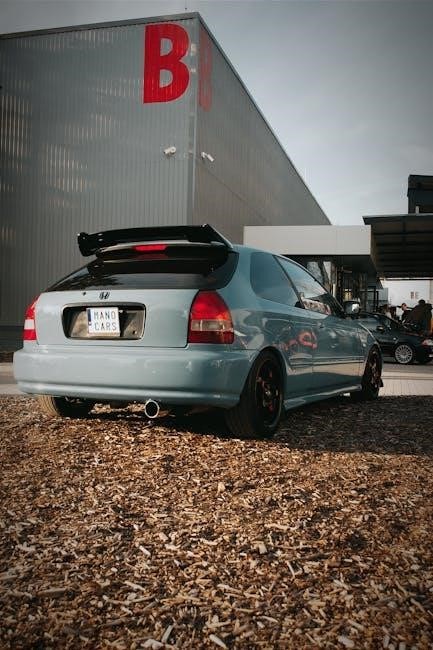
A careful break-in period is crucial for longevity. Avoid hard acceleration, high RPMs, and sustained loads for the first 500-1000 miles. Vary engine speed and load to allow piston rings to properly seat against cylinder walls. Frequent oil changes during this period – at 300, 500, and 1000 miles – remove metallic particles from the initial wear.
Monitor gauges closely for any anomalies. Listen for unusual noises. Gentle driving during break-in maximizes performance and prevents premature engine failure, safeguarding your investment.
Potential Challenges and Troubleshooting
Engine swaps aren’t always seamless; anticipate hurdles. Common wiring issues arise from mismatched connectors or incorrect pinouts, requiring meticulous tracing and potentially custom wiring. Mounting and fitment problems can occur due to slight chassis variations or aftermarket component inaccuracies, demanding adjustments or fabrication.
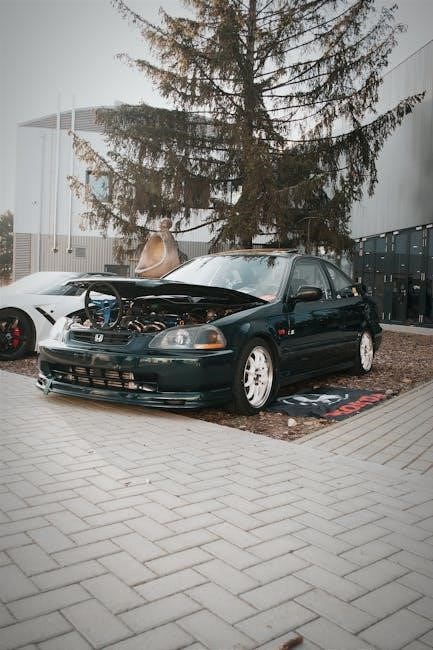
Diagnostic tools are essential for identifying post-swap issues. Thoroughly check for leaks, ensure proper sensor operation, and address any error codes promptly. Patience and a systematic approach are key to resolving these challenges.
Common Wiring Issues
Wiring is often the most complex aspect of a Civic swap. Mismatched connectors between the donor engine and the Civic’s chassis loom are frequent. Incorrect pinouts, where wires are connected to the wrong terminals, can cause critical system failures. Expect to spend significant time tracing wires and verifying functionality.
Grounding issues are also common, leading to erratic sensor readings or engine malfunctions. Utilizing a wiring diagram specific to both engines and the Civic is crucial. Custom wiring may be necessary for certain features.

Mounting and Fitment Problems
Physical fitment can present significant hurdles during a Civic swap. Engine mounts rarely align perfectly, necessitating the use of aftermarket adapters or custom fabrication. Transmission compatibility is also key; mismatched pairings can create driveline angle issues.
Clearance becomes a concern with larger engines, potentially requiring modifications to the firewall or hood. Exhaust systems often need custom bends to accommodate the new engine’s configuration. Careful measurement and planning are essential to avoid these frustrating fitment challenges.