Baby Shoe Size Guide: A Comprehensive Overview (Updated February 15‚ 2026)
Navigating baby footwear can be tricky! This guide offers a detailed look at sizing‚
focusing on age-related approximations alongside precise measurements for a comfortable fit.
Finding the right size ensures healthy foot development for your little one.
Understanding Baby Foot Development
A baby’s foot is remarkably different from an adult’s! Initially‚ a baby’s foot is primarily composed of soft cartilage‚ making it incredibly flexible and prone to changing shape. This cartilage gradually ossifies – turns into bone – over time‚ a process that isn’t fully complete until around age three.
During the first year‚ feet grow rapidly‚ approximately one shoe size every two months‚ though this varies significantly between individuals. Because of this rapid growth‚ frequent checks are crucial. Unlike adult feet which have defined arches‚ a baby’s arches are still developing and often aren’t fully formed until they begin walking.
Fat pads provide cushioning‚ and these also develop over the first year. It’s vital to avoid restricting natural foot movement with overly stiff shoes‚ as this can hinder healthy development. Understanding these developmental stages is key to selecting appropriate footwear that supports‚ rather than constrains‚ your baby’s growing feet.
Why Accurate Shoe Sizing Matters
Properly fitted shoes are paramount for healthy foot development in babies. Ill-fitting shoes can lead to a multitude of problems‚ ranging from minor discomfort to long-term structural issues. Shoes that are too small can constrict growing feet‚ causing blisters‚ ingrown toenails‚ and even impacting gait development.
Conversely‚ shoes that are too large can cause instability‚ leading to tripping and difficulty learning to walk. A loose fit forces babies to grip with their toes‚ potentially affecting muscle development. Accurate sizing ensures the foot has enough room to move naturally‚ allowing for proper bone and muscle growth.

Comfort is also key! A comfortable baby is a happy baby‚ and well-fitting shoes contribute significantly to overall comfort. Prioritizing accurate sizing isn’t just about preventing problems; it’s about supporting a baby’s natural movement and fostering a positive experience with footwear.
Measuring Your Baby’s Foot: A Step-by-Step Guide
Accurate measurement is the foundation of finding the right shoe size. Begin by having your baby sit or lie down with their foot flat. Trace the outline of their foot onto a piece of paper – ensure the pencil is held vertically for accuracy. Repeat for the other foot‚ as sizes can vary.
Measure the length of the tracing from the heel to the longest toe. It’s crucial to measure to the tip of the longest toe‚ not necessarily the big toe. Use a ruler or measuring tape‚ and measure in millimeters or inches.
Add a growth allowance: Typically‚ add 12-15mm (approximately 0.5 inches) to the measured length to allow for growth and comfortable movement. This allowance is vital‚ as babies’ feet grow rapidly. Remember to use the larger foot measurement when determining shoe size.
Tools You’ll Need for Accurate Measurement
Gathering the right tools ensures a precise and reliable measurement of your baby’s foot. A simple‚ yet effective‚ tool is a piece of paper – cardstock works best as it provides a firmer surface for tracing. You’ll also need a pencil‚ held vertically to avoid angled tracing‚ which can skew results.
A ruler or measuring tape is essential for accurately determining the length of the foot tracing. Opt for a ruler with millimeter markings for greater precision‚ or a flexible measuring tape that conforms to the foot’s shape.
Consider a specialized foot measuring device‚ available online or at some shoe stores. These devices often provide a more accurate reading‚ especially for wiggly babies. Finally‚ a pen or marker can be useful for clearly marking the heel and longest toe on the tracing for easy measurement.
Converting Foot Length to Shoe Size: US Sizing
Once you have your baby’s foot length in inches‚ converting to US shoe size requires referencing a standard chart. Keep in mind that sizing can vary slightly between brands‚ so this serves as a general guideline. A foot length of 3.5 inches typically corresponds to a US size 1‚ while 4 inches equates to a size 2.
For a foot measuring 4.5 inches‚ look for a US size 3. As the foot grows‚ 5 inches generally aligns with a size 4‚ and 5.5 inches with a size 5. It’s crucial to remember these are approximate conversions.
Always prioritize fit over the number on the shoe. A slightly larger size with room for growth is preferable to a shoe that’s too snug. Refer to brand-specific size charts whenever possible for the most accurate fit‚ as variations are common within the US sizing system.
Converting Foot Length to Shoe Size: UK Sizing
Converting foot length to UK shoe sizes requires a different chart than US sizing. A foot measuring 3.5 inches often corresponds to a UK size 0.5‚ while 4 inches typically equates to a size 1.5. Remember‚ these are estimations‚ and brand variations exist.
For a 4.5-inch foot‚ a UK size 2.5 is generally appropriate. As the foot grows to 5 inches‚ a size 3.5 is usually a good fit‚ and 5.5 inches often corresponds to a size 4.5. It’s vital to understand that UK sizing runs differently than US sizing.
Always prioritize comfort and room for growth. A slightly larger shoe is better than one that constricts the foot. Consult brand-specific size guides whenever available to ensure the most accurate fit‚ as discrepancies between manufacturers are common within the UK system.
Converting Foot Length to Shoe Size: European Sizing
European (EU) shoe sizing presents another conversion layer for baby footwear. A foot measuring 9cm (approximately 3.5 inches) generally aligns with an EU size 16. As the foot extends to 10cm (around 4 inches)‚ an EU size 17 becomes suitable. Remember‚ these are approximate guidelines.
For a 11cm foot (roughly 4.3 inches)‚ an EU size 18 is typically recommended. A 12cm foot (approximately 4.7 inches) often fits an EU size 19‚ and 13cm (around 5.1 inches) usually corresponds to an EU size 20. EU sizing tends to be more consistent across brands than US or UK sizing‚ but variations still occur.
Prioritize a comfortable fit with some growing room. Always check the specific brand’s size chart‚ as EU sizes can differ slightly. Consider the sock thickness when measuring and converting to ensure an accurate and comfortable shoe fit for your baby’s developing feet.
Age-Based Shoe Size Chart (Approximate Guide)
This age-based chart provides a rough estimate; individual foot growth varies significantly. Newborns (0-3 months) typically wear sizes 1-3 (US) or 16-18 (EU)‚ but foot length is crucial for accuracy. Between 3-6 months‚ sizes 3-4 (US) or 18-19 (EU) are common‚ though some babies may still fit smaller sizes.
As babies reach 6-9 months‚ sizes 4-5 (US) or 19-20 (EU) often become necessary. From 9-12 months‚ expect sizes 5-6 (US) or 20-21 (EU). Toddlers aged 12-18 months generally require sizes 6-7 (US) or 21-22 (EU).
Remember‚ these are broad ranges. Regular foot measurements are essential‚ as babies grow rapidly. Don’t rely solely on age; foot length is the most reliable indicator of proper shoe size. Always prioritize a comfortable fit with adequate growing room to support healthy foot development.
0-3 Months Shoe Sizes
For newborns and babies in the 0-3 month range‚ shoe sizing is particularly approximate. Many babies don’t require shoes at all during this period‚ as socks often suffice for warmth and protection indoors. However‚ if shoes are desired‚ sizes typically range from 1 to 3 in US sizing‚ equating to approximately 16 to 18 in European sizing.
Foot length at this age is generally between 3.5 to 4.5 inches (8.9 to 11.4 cm). It’s crucial to remember that growth spurts are common‚ so frequent checks are vital. Soft-soled shoes are generally recommended to allow for natural foot development and movement.
Avoid shoes that are too rigid or constricting. Prioritize flexibility and breathability. Measuring the foot accurately is key‚ even at this young age‚ to ensure a comfortable and appropriate fit. Consider that sizing can vary between brands‚ so always check specific size charts.
3-6 Months Shoe Sizes
As babies enter the 3-6 month stage‚ their feet are growing rapidly! Expect more noticeable changes in size‚ making regular measurements even more important. Typical shoe sizes fall between 3 and 4.5 in US sizing‚ corresponding to roughly 18 to 19.5 in European sizing.
Foot length generally ranges from 4.5 to 5.5 inches (11.4 to 14 cm). Babies are becoming more active‚ potentially starting to bear weight on their feet‚ so appropriate footwear becomes increasingly relevant. Soft-soled shoes remain a good choice‚ promoting natural foot development and allowing for flexibility.
Look for shoes with a wide toe box to allow toes to splay naturally. Ensure the shoe doesn’t pinch or rub anywhere. Remember that sizing can differ between brands‚ so consulting a brand’s specific chart is essential. Don’t assume your baby will remain in the same size for long!
6-9 Months Shoe Sizes
Between 6 and 9 months‚ babies are often pulling to stand and may even be taking their first steps! This increased activity demands footwear that provides support and protection‚ while still allowing for natural movement. Expect shoe sizes to range from 4.5 to 6 in US sizing‚ equating to approximately 19.5 to 21 in European sizing.
Foot length typically measures between 5.5 and 6.5 inches (14 to 16.5 cm). Consider shoes with a slightly firmer sole than purely soft-soled options‚ offering a bit more stability as they begin to walk. However‚ flexibility remains crucial; avoid overly rigid shoes.
Continue to prioritize a wide toe box and a comfortable fit. Regularly check for signs of tightness‚ such as redness or discomfort. Remember that growth spurts are common‚ so frequent measurements are vital. Brand sizing variations persist‚ so always refer to specific brand charts for accuracy.
9-12 Months Shoe Sizes
As babies confidently cruise and walk between 9 and 12 months‚ their feet continue to develop rapidly. Shoe sizes generally fall between 6 and 8 in US sizing‚ corresponding to approximately 21.5 to 23 in European sizing. Foot length typically ranges from 6.5 to 7.5 inches (16.5 to 19 cm).
Focus on shoes that offer good ankle support without restricting movement. A flexible‚ yet durable sole is ideal‚ allowing for natural foot flexion during walking. Ensure the shoe bends easily at the ball of the foot. Breathable materials‚ like leather or canvas‚ help prevent overheating and discomfort.
Regularly assess the fit‚ looking for adequate toe room – about a thumb’s width between the longest toe and the shoe’s end. Don’t assume feet grow at a consistent rate; frequent measurements are key. Be mindful of brand-specific sizing differences and consult individual size charts for the most accurate fit.
12-18 Months Shoe Sizes
Between 12 and 18 months‚ toddlers are actively walking and exploring‚ demanding shoes that support their increasing mobility. Expect shoe sizes to range from 7 to 9 in US sizing‚ equating to roughly 23 to 24.5 in European sizing. Foot length typically measures between 7.5 and 8.5 inches (19 to 21.6 cm).
Prioritize shoes with a wider toe box to accommodate natural foot splay and prevent constriction. Look for lightweight designs that won’t weigh down little legs. Secure closures‚ such as Velcro straps‚ are beneficial for independent toddlers attempting to put on their own shoes.
Continue checking the fit frequently‚ as growth spurts are common. Ensure there’s approximately a thumb’s width of space at the toe. Consider the terrain – more robust soles are needed for outdoor adventures. Remember that sizing can vary significantly between brands‚ so always double-check specific charts.
Dealing with Fast Growth: When to Remeasure
Babies’ feet grow at an astonishing rate‚ particularly during their first year. Regular remeasuring is crucial to ensure shoes aren’t hindering development. Aim to check foot length every 2-3 months for infants‚ and monthly for active toddlers between 12-18 months.
Be vigilant for signs that shoes are becoming too snug‚ such as redness‚ blisters‚ or complaints of discomfort. Growth spurts can occur unexpectedly‚ quickly rendering previously well-fitting shoes too small. Don’t rely solely on age-based charts‚ as individual growth varies considerably.
Remasure both feet‚ as size discrepancies are common. Measure at the end of the day‚ when feet are typically at their largest. Always remeasure after a growth spurt is suspected. Prioritize comfort and proper fit over simply sticking to a previously determined size.
Recognizing When Shoes Are Too Small
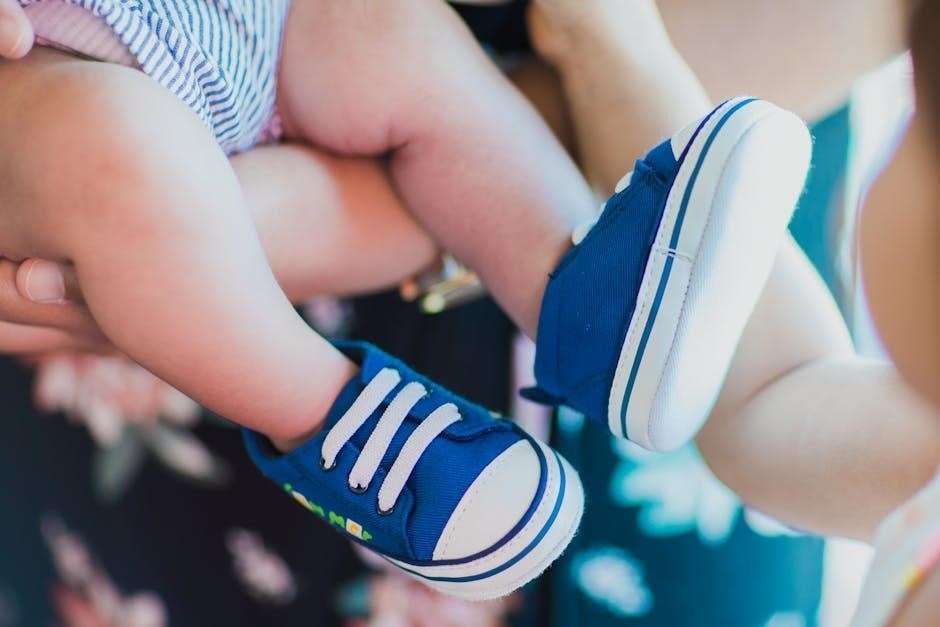
Identifying ill-fitting shoes is vital for healthy foot development. Look for visible signs of discomfort‚ such as your baby fussing or refusing to wear the shoes. Redness or blisters on the toes‚ ankles‚ or heels are clear indicators of a poor fit. Check for creases or dents in the shoe where your baby’s foot bends – this suggests insufficient space.
The “thumb test” is a quick check: you should be able to comfortably fit your thumb’s width between the end of your baby’s longest toe and the shoe’s tip. Observe how your baby walks; difficulty walking or a change in gait can signal tight shoes. Pay attention to sock fit; if socks become difficult to put on‚ the shoe may be too small.
Don’t ignore your instincts! If something feels off‚ remeasure and reassess the fit. Prioritize your baby’s comfort and foot health above all else.
Types of Baby Shoes and Their Fit Considerations
Different baby shoe types require varying fit approaches. Soft-soled shoes‚ ideal for early walkers‚ should mirror the natural shape of the foot‚ allowing flexibility and sensory feedback. Ensure a snug‚ but not tight‚ fit‚ with enough room for toe wiggling. Pre-walking shoes often have more structure but still prioritize flexibility.
Hard-soled shoes‚ typically for more confident walkers‚ need a wider toe box to accommodate natural splay. Boots require extra space for socks and potential growth. Sandals should have adjustable straps to secure the foot and prevent slipping. Always check for chafing around the ankles and straps.
Consider the shoe’s material; leather stretches‚ while synthetic materials offer less give. Prioritize breathable materials to prevent overheating and moisture buildup. Regularly assess the fit as your baby’s feet change rapidly.
Soft Sole vs. Hard Sole Shoes: What’s Best?
The “best” choice between soft and hard sole shoes depends on your baby’s developmental stage. Soft-soled shoes are generally recommended for pre-walkers and early walkers (0-18 months). Their flexibility promotes natural foot movement‚ strengthening muscles and aiding balance. They allow babies to feel the ground‚ crucial for developing proprioception – awareness of their body in space.
Hard-soled shoes become more appropriate as your baby gains confidence walking and begins to spend more time on harder surfaces. They offer more support and protection. However‚ excessive rigidity can hinder natural foot development. Look for shoes with a flexible sole and a wide toe box.
Transitioning gradually is key. Don’t rush into hard-soled shoes. Observe your baby’s gait; if they seem restricted or uncomfortable‚ revert to softer options. Prioritize foot health over aesthetics‚ and always prioritize a proper fit.
Common Shoe Size Mistakes to Avoid
One of the most frequent errors is assuming age-based charts are definitive. While helpful as a starting point‚ they’re merely estimates. Each baby’s foot grows at a unique pace. Relying solely on age can lead to ill-fitting shoes‚ hindering development.
Another mistake is buying shoes “to grow into.” A shoe that’s too large offers no support and can cause tripping or blisters. Always prioritize a snug‚ but not tight‚ fit. Regularly checking foot length is crucial‚ especially during growth spurts.
Ignoring width is also a common oversight. Feet come in various widths‚ and a narrow or wide shoe can cause discomfort. Always measure width alongside length. Finally‚ don’t assume sizing is consistent across brands; always check individual size charts.
Brands Known for Accurate Sizing
Stride Rite consistently receives praise for its reliable and consistent sizing. They offer a wide range of widths‚ catering to diverse foot shapes‚ and frequently update their size charts. Their focus on pediatric foot health contributes to accurate fits.
See Kai Run is another brand lauded for its true-to-size footwear. They prioritize flexibility and natural foot movement‚ and their sizing tends to align well with standard measurements. Many parents report minimal issues finding the correct size.
Robeez‚ specializing in soft-sole shoes‚ also maintains a good reputation for sizing accuracy. Their flexible designs accommodate early walkers‚ and their charts are generally dependable. Pediped is also frequently mentioned for consistent sizing and quality construction‚ offering both soft and hard-sole options.
Online Shoe Size Calculators: Reliability and Usage
Online shoe size calculators can be a helpful starting point‚ but shouldn’t be solely relied upon. These tools typically convert foot length (in inches or centimeters) into estimated shoe sizes based on various sizing systems (US‚ UK‚ EU). Accuracy varies significantly between calculators and brands.
It’s crucial to remember these are estimations. Factors like foot width‚ shoe style‚ and manufacturer differences can impact the fit. Always cross-reference the calculator’s result with the specific brand’s size chart. Look for calculators offered directly on the retailer’s or brand’s website for potentially better accuracy.
Use a calculator after accurately measuring your baby’s foot. Treat the result as a preliminary guide‚ and prioritize a physical fit check whenever possible. Consider reading customer reviews regarding sizing for the specific shoe you’re interested in.
Resources for Further Information & Printable Charts
For more in-depth information on baby foot development and shoe fitting‚ several reliable resources are available. The American Academy of Pediatrics offers guidance on pediatric foot health‚ including articles on proper footwear. Websites specializing in children’s health‚ like KidsHealth‚ provide detailed explanations of growth milestones.
Numerous websites offer printable shoe size charts. These charts can be incredibly convenient for quick reference‚ especially during growth spurts. Search for charts specifically designed for baby and toddler sizes‚ and ensure they include multiple sizing systems (US‚ UK‚ EU).
Consider downloading charts from reputable shoe retailers or pediatric podiatry websites. Remember that printable charts are still approximations; a professional fitting is always recommended. Look for resources that also explain how to measure a baby’s foot correctly for the most accurate results.
Where to Buy Baby Shoes (Online & In-Store)
Baby shoes are widely available from numerous retailers‚ both online and in brick-and-mortar stores. Major department stores like Target and Walmart offer a broad selection at affordable prices‚ often with convenient return policies. Specialty children’s shoe stores‚ such as Stride Rite‚ provide expert fittings and a wider range of sizes and styles.
Online retailers like Amazon‚ Zappos‚ and directly from brand websites (e.g.‚ Pediped‚ See Kai Run) offer extensive choices and competitive pricing. Always check the retailer’s sizing chart and return policy before purchasing online. Reading customer reviews can provide valuable insights into fit accuracy.
Local boutiques often carry unique and high-quality baby shoes. Don’t hesitate to ask store associates for assistance with sizing and recommendations. Prioritize stores that offer professional foot measurements for the best fit‚ ensuring your baby’s comfort and healthy foot development.