Cell transport is fundamental to life, encompassing processes like diffusion, osmosis, and active transport, enabling cells to maintain homeostasis and function optimally.
Importance of Cell Transport
Cell transport is absolutely critical for numerous biological functions, underpinning survival at every level. It facilitates nutrient uptake essential for cellular metabolism, providing the building blocks and energy sources required for growth and maintenance. Simultaneously, it’s vital for waste removal, eliminating toxic byproducts that could otherwise accumulate and disrupt cellular processes.
Maintaining proper ion concentrations, crucial for nerve impulse transmission and muscle contraction, relies heavily on efficient transport mechanisms. Furthermore, cell transport plays a key role in intercellular communication, allowing cells to signal each other and coordinate activities. Processes like endocytosis and exocytosis are fundamental for cellular signaling and immune responses. Without these precise transport mechanisms, cells would be unable to maintain internal stability, respond to their environment, or perform their specialized functions, ultimately leading to cellular dysfunction and organismal failure.
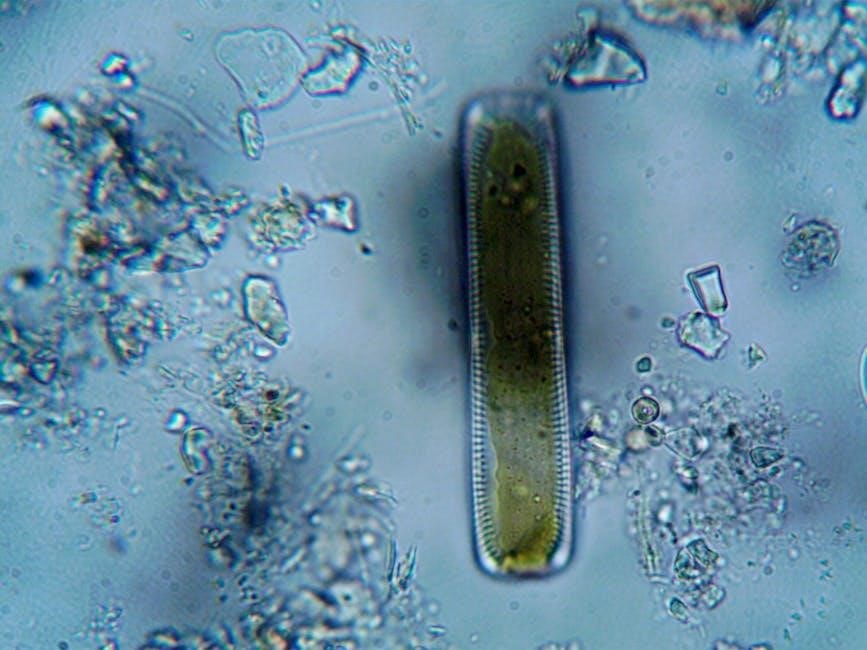
Cell Membrane Structure & its Role in Transport
The cell membrane, primarily composed of a phospholipid bilayer, acts as a selective barrier controlling the movement of substances in and out of the cell. This structure’s fluidity allows molecules to move within the bilayer, contributing to membrane flexibility and function. Embedded within this bilayer are proteins – integral and peripheral – that play diverse roles in transport.
These proteins facilitate the passage of molecules via channels and carriers, enabling both passive and active transport. The membrane’s selective permeability is crucial; it allows small, nonpolar molecules to diffuse freely, while restricting larger, polar, or charged molecules. This control is essential for maintaining cellular homeostasis. The structure directly influences transport rates and mechanisms, dictating which substances can cross and how, ultimately governing cellular function and communication.

Passive Transport Mechanisms
Passive transport relies on concentration gradients, utilizing diffusion and osmosis to move substances across membranes without expending cellular energy.
Simple Diffusion

Simple diffusion is a passive transport mechanism where substances move across cell membranes down their concentration gradient, requiring no energy expenditure by the cell. This movement occurs directly through the phospholipid bilayer, favoring small, nonpolar molecules like oxygen, carbon dioxide, and nitrogen.
The rate of simple diffusion is influenced by factors such as temperature, concentration difference, and the membrane’s permeability. Higher temperatures and steeper concentration gradients accelerate the process. Molecules essentially “follow” the second law of thermodynamics, dispersing from areas of high concentration to areas of low concentration until equilibrium is reached.
Importantly, simple diffusion doesn’t involve carrier proteins; it’s a direct interaction between the substance and the lipid bilayer. This limits its effectiveness for polar or charged molecules, which struggle to cross the hydrophobic core of the membrane without assistance.
Facilitated Diffusion
Facilitated diffusion is another form of passive transport, but unlike simple diffusion, it requires the assistance of membrane proteins to move substances across the cell membrane. This is crucial for larger, polar, or charged molecules that cannot easily traverse the hydrophobic lipid bilayer on their own.
Two main types of proteins mediate facilitated diffusion: channel proteins and carrier proteins. Channel proteins create a pore through the membrane, allowing specific ions or molecules to pass through. Carrier proteins bind to the substance, undergo a conformational change, and release it on the other side.
Like simple diffusion, facilitated diffusion moves substances down their concentration gradient and doesn’t require ATP. However, it exhibits saturation kinetics – as more protein transporters become occupied, the rate of transport plateaus. Specificity is also key; each transporter typically facilitates the movement of only certain molecules.
Osmosis & Water Potential
Osmosis is a special case of diffusion focusing specifically on the movement of water across a semi-permeable membrane. Water moves from an area of high water potential to an area of low water potential, effectively moving from where there’s more free water to where there’s less.
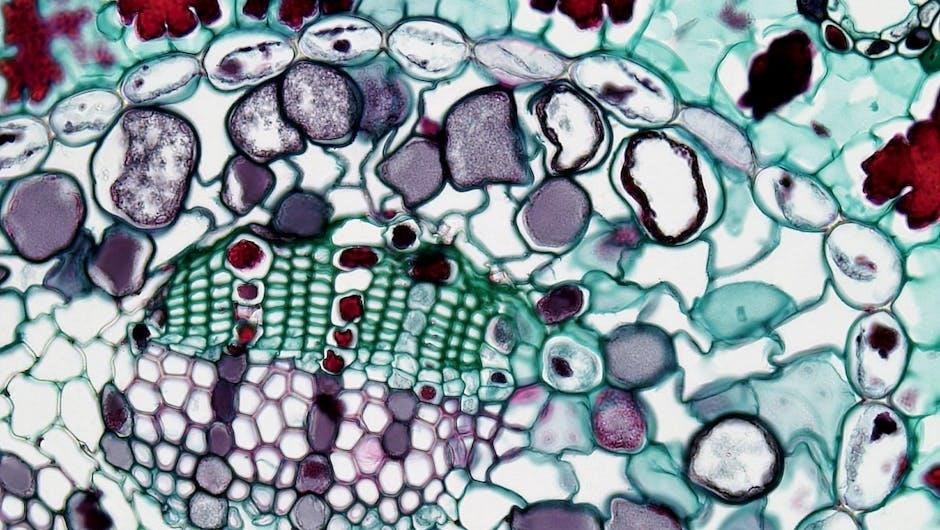
Water potential is influenced by solute concentration and pressure. Adding solutes lowers water potential, while increasing pressure raises it. Understanding water potential is crucial for predicting the direction of water movement in biological systems.
Cells in hypotonic solutions (low solute concentration) gain water, potentially leading to lysis. Conversely, cells in hypertonic solutions (high solute concentration) lose water, causing crenation. Isotonic solutions maintain equilibrium. Osmosis is vital for plant turgor pressure and maintaining fluid balance in animals.
Factors Affecting Passive Transport Rates
Passive transport rates are significantly influenced by several key factors. Temperature plays a role; higher temperatures generally increase molecular motion and thus diffusion rates, up to a certain point where proteins may denature. Concentration gradients are paramount – steeper gradients lead to faster transport.
Membrane surface area also matters; a larger surface area allows for more molecules to cross simultaneously. Membrane permeability, determined by the lipid composition and protein channels, impacts how easily substances pass through.
Molecular size is crucial; smaller molecules diffuse more rapidly than larger ones. Finally, distance traveled affects the rate; shorter distances result in quicker transport. These factors interact to determine the overall efficiency of passive movement across the cell membrane.
Active Transport Mechanisms
Active transport utilizes energy, often ATP, to move substances against their concentration gradients, employing protein pumps and carriers for cellular function.
Primary Active Transport
Primary active transport directly utilizes metabolic energy, such as ATP hydrolysis, to drive the movement of molecules across cell membranes against their concentration gradients. This process fundamentally alters the intracellular and extracellular concentrations of ions and other essential molecules.
A prime example is the sodium-potassium pump (Na+/K+ ATPase), a crucial transmembrane protein found in animal cells. This pump actively transports three sodium ions (Na+) out of the cell for every two potassium ions (K+) pumped in, maintaining the electrochemical gradient vital for nerve impulse transmission, muscle contraction, and maintaining cell volume.
Other examples include the calcium pump (Ca2+ ATPase), which maintains low intracellular calcium concentrations, and proton pumps (H+ ATPase), found in various cellular compartments like lysosomes and the stomach, contributing to acidification. These pumps are integral to numerous physiological processes, demonstrating the significance of primary active transport in cellular life.
Secondary Active Transport
Secondary active transport leverages the electrochemical gradient established by primary active transport to move other molecules across the cell membrane. Unlike primary transport, it doesn’t directly use ATP; instead, it relies on the potential energy stored in the ion gradient.
There are two main types: symport and antiport. Symport involves the simultaneous movement of two molecules in the same direction, often utilizing the sodium gradient to transport glucose or amino acids into the cell. Conversely, antiport moves two molecules in opposite directions, like the sodium-calcium exchanger, removing calcium from the cell while bringing sodium in.
These mechanisms are crucial for nutrient absorption in the intestines, neurotransmitter reuptake in neurons, and maintaining cellular homeostasis. Secondary active transport effectively couples the favorable movement of one molecule down its gradient to the unfavorable movement of another, showcasing an efficient use of cellular energy.
Ion Channels & Pumps
Ion channels and pumps are integral membrane proteins critical for regulating ion concentrations across the cell membrane, impacting cellular excitability and signaling. Ion channels are pore-forming proteins allowing specific ions to flow down their electrochemical gradient – a passive process, though gated channels can be regulated.
Ion pumps, however, are active transporters utilizing ATP to move ions against their gradient. The sodium-potassium pump (Na+/K+ ATPase) is a prime example, maintaining resting membrane potential and driving secondary active transport. Other pumps exist for calcium, protons, and other ions.
These proteins are vital for nerve impulse transmission, muscle contraction, and maintaining cell volume. Dysfunctional ion channels or pumps can lead to various diseases, highlighting their essential role in physiological processes and cellular health.
Bulk Transport
Bulk transport mechanisms, including endocytosis and exocytosis, move large molecules and particles across the cell membrane, utilizing vesicle formation and fusion.
Endocytosis
Endocytosis represents a vital cellular process where substances are brought into the cell by engulfing them within the plasma membrane, forming vesicles. This process is crucial for nutrient uptake, immune defense, and cellular communication. There are several distinct types of endocytosis, each tailored to specific cargo and mechanisms.
Phagocytosis, often termed “cell eating,” involves the uptake of large particles, such as bacteria or cellular debris, by specialized cells like macrophages. The cell membrane extends around the particle, eventually forming a large vesicle called a phagosome.
Pinocytosis, or “cell drinking,” is a non-specific process where the cell internalizes extracellular fluid containing dissolved solutes. It involves the formation of smaller vesicles compared to phagocytosis, and is continuous, allowing for constant sampling of the extracellular environment.
Phagocytosis
Phagocytosis is a specialized form of endocytosis primarily utilized by immune cells – like macrophages and neutrophils – to engulf and eliminate large particles, including bacteria, dead cells, and cellular debris. This “cell eating” process begins with the recognition and binding of the particle to receptors on the phagocyte’s surface.
Subsequently, the plasma membrane extends outwards, forming pseudopods that surround the particle, eventually fusing to create a large intracellular vesicle called a phagosome. The phagosome then fuses with lysosomes, organelles containing digestive enzymes, breaking down the engulfed material.
This process is critical for immune defense, tissue remodeling, and maintaining cellular homeostasis. Phagocytosis is an energy-dependent process, requiring actin polymerization and motor proteins for membrane extension and vesicle formation.
Pinocytosis
Pinocytosis, often referred to as “cell drinking,” is another form of endocytosis where cells internalize extracellular fluid containing dissolved solutes. Unlike phagocytosis, pinocytosis involves the uptake of smaller volumes of fluid and doesn’t typically require specific receptor-ligand interactions, although receptor-mediated pinocytosis exists.
The process begins with invagination of the plasma membrane, forming small vesicles – pinocytic vesicles – that enclose the extracellular fluid. These vesicles then pinch off from the membrane and move into the cytoplasm. Pinocytosis is a non-specific process, meaning the cell takes in whatever solutes are present in the surrounding fluid.
It’s crucial for nutrient uptake, sampling the extracellular environment, and maintaining cellular hydration. Pinocytosis is also an energy-dependent process, though generally less energy-intensive than phagocytosis.
Exocytosis
Exocytosis is the cellular process of releasing molecules – such as proteins, hormones, and waste products – from inside the cell to the extracellular fluid. It’s essentially the reverse of endocytosis, involving the fusion of vesicles containing these molecules with the plasma membrane.
This fusion process requires energy, typically in the form of ATP, and is tightly regulated to ensure proper release. There are two main types of exocytosis: constitutive and regulated. Constitutive exocytosis is a continuous process, while regulated exocytosis requires a specific signal, like a calcium influx, to trigger release.
Exocytosis is vital for cellular communication, secretion of signaling molecules, and removal of cellular debris. It plays a critical role in neurotransmission, hormone release, and immune responses.

Transport Across Nuclear Membranes
Nuclear pore complexes (NPCs) meticulously regulate the movement of molecules between the nucleus and cytoplasm, ensuring genomic integrity and gene expression.
Nuclear Pore Complexes
Nuclear pore complexes (NPCs) are massive protein structures embedded within the nuclear envelope, serving as the sole gateway for molecular traffic between the nucleus and the cytoplasm. These intricate complexes aren’t simply passive channels; they actively mediate transport, discerning between cargo that should enter or exit the nucleus.
Composed of approximately 30 different proteins called nucleoporins, NPCs form a ring-like structure with a central channel. Transport is facilitated by soluble transport receptors – karyopherins – which recognize nuclear localization signals (NLS) on proteins destined for the nucleus, or nuclear export signals (NES) on those leaving.
Karyopherin α and β form a heterodimeric complex crucial for this process. The complex binds cargo, interacts with the NPC, and translocates the cargo through the pore. This regulated transport is vital for maintaining genomic stability, controlling gene expression, and coordinating cellular functions. Disruptions in NPC function can lead to various diseases.
Cell Transport in Specific Physiological Conditions
Specific conditions, like hypernatremia and hypoxia, dramatically alter cell transport mechanisms, demanding adaptive responses to maintain cellular function and overall homeostasis.
Ion Transport in Hypernatremia
Hypernatremia, characterized by elevated sodium levels in the blood, profoundly impacts ion transport within cells, particularly in the proximal tubules of the kidneys. This condition triggers increased ion transport as the body attempts to restore fluid balance, though it can ultimately diminish the reabsorption capacity of epithelial cells.
The increased sodium concentration drives osmotic shifts, influencing water movement and cellular volume. Consequently, cells initiate compensatory mechanisms involving various ion channels and pumps to regulate intracellular sodium and potassium levels. However, sustained hypernatremia can overwhelm these regulatory systems, leading to cellular dehydration and impaired function.
Understanding these transport alterations is crucial, as they contribute to the clinical manifestations of hypernatremia, including neurological dysfunction and potential organ damage. Effective management necessitates careful monitoring of electrolyte balance and targeted interventions to correct the underlying sodium imbalance and restore normal cellular transport processes.
Mitochondrial Adaptations to Hypoxia & Transport
Hypoxia, a state of reduced oxygen availability, necessitates significant adaptations within mitochondria to maintain cellular energy production and function. These adaptations profoundly influence transport processes, impacting the movement of metabolites and ions crucial for ATP synthesis.
Mitochondrial adaptations include alterations in the expression of transport proteins located on the inner mitochondrial membrane, optimizing the uptake of substrates like pyruvate and the efflux of ATP. Furthermore, changes in mitochondrial morphology and dynamics enhance efficiency under low-oxygen conditions. These adjustments are vital for sustaining cellular respiration despite limited oxygen.
The analytical review of these adaptations reveals complex interplay between mitochondrial transport mechanisms and cellular survival pathways. Understanding these processes is critical for comprehending the pathophysiology of hypoxic conditions and developing targeted therapeutic strategies to mitigate cellular damage and restore normal mitochondrial function.