Manual fluid pumps are essential hydraulic devices, transferring fluids across diverse sectors, from agriculture to medicine, offering a simple yet effective solution for fluid movement.
What is a Manual Fluid Pump?
A manual fluid pump is a mechanical device designed to impart kinetic energy to fluids – liquids, slurries, or gases – utilizing human power as its primary energy source. Unlike motorized pumps, these devices rely on physical force applied through handles, levers, or other manual mechanisms to generate the pressure needed for fluid transfer.
Essentially, they are positive displacement machines, meaning they move a fixed volume of fluid with each stroke or cycle. This contrasts with centrifugal pumps, which rely on velocity. Their simplicity makes them incredibly versatile, finding applications where electricity isn’t available or practical. They are fundamental components in various industries, facilitating critical processes like irrigation, chemical transfer, and even medical fluid delivery, offering a reliable and often cost-effective pumping solution.
Historical Development of Manual Pumps
The history of manual fluid pumps stretches back to ancient civilizations. Early forms, like the Archimedes screw, utilized human power to lift water for irrigation and drainage as far back as the 3rd century BC. Roman engineers further developed these concepts, employing piston pumps for water supply and mining operations.
Throughout the Middle Ages, simple hand-operated pumps remained crucial for water extraction. The industrial revolution spurred significant advancements, with improved materials and designs leading to more efficient and reliable pumps. The 19th and 20th centuries saw refinements in pump mechanisms, including the development of diaphragm and gear pumps, expanding their applications across diverse industries. Today, despite advancements in electric pumps, manual versions continue to be valued for their portability and simplicity.
Types of Manual Fluid Pumps
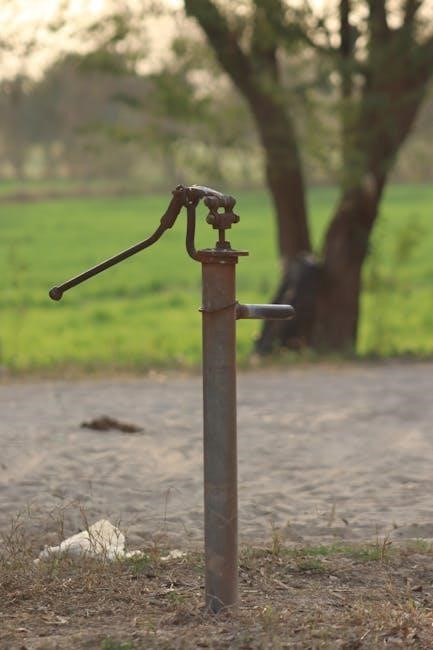
Manual fluid pumps encompass piston, diaphragm, peristaltic, gear, and rotary vane designs, each uniquely suited for specific fluid handling requirements and applications.
Piston Pumps: Mechanism and Applications
Piston pumps operate on a reciprocating principle, utilizing a piston within a cylinder to create suction and discharge fluid with each stroke. The mechanism involves the piston’s movement, driven by a manual lever, drawing fluid in during the intake stroke and expelling it during the compression stroke.
Check valves are crucial, ensuring unidirectional flow by preventing backflow. These pumps excel in applications demanding high pressure and relatively low flow rates. Common uses include transferring oils and coolants in the automotive industry, delivering fluids in agricultural spraying systems, and even specialized applications within industrial chemical transfer processes.
Their robust design makes them suitable for handling viscous fluids, and their simplicity allows for reliable operation with minimal maintenance. However, they can produce pulsating flow, which may require dampening in sensitive applications. The positive displacement nature of piston pumps guarantees a consistent volume of fluid is moved per stroke, enhancing control and accuracy.
Diaphragm Pumps: Functionality and Uses
Diaphragm pumps utilize a flexible diaphragm, reciprocated by a manual mechanism, to create pumping action. This flexing action generates alternating vacuum and pressure within the pump chamber, drawing and discharging fluid. Unlike piston pumps, the fluid doesn’t contact the pump’s moving parts, making them ideal for handling corrosive or abrasive substances.
They are particularly valuable in applications where contamination prevention is paramount, such as certain medical fluid delivery systems. Diaphragm pumps are also frequently employed in chemical transfer, offering excellent resistance to a wide range of chemicals. Their self-priming capability and ability to run dry without damage are significant advantages.
While generally offering lower pressures compared to piston pumps, they provide smooth, pulse-free flow. Manual diaphragm pumps are favored for their simplicity, reliability, and suitability for handling delicate or sensitive fluids, making them a versatile choice across various industries.
Peristaltic Pumps: How They Work & Advantages
Peristaltic pumps operate on a unique principle: fluid is contained within a flexible tube, and rollers or shoes compress the tube, creating a peristaltic wave that pushes the fluid forward. This design ensures the fluid only contacts the tubing, preventing contamination and making it ideal for sterile applications.
Manual peristaltic pumps are increasingly utilized in medical settings for precise fluid delivery, including medications and nutrients, due to their gentle handling of fluids and minimal shear stress. They excel in applications requiring accurate dosing and protection of the pumped medium.
Key advantages include the ability to handle viscous, abrasive, and sterile fluids, alongside self-priming capabilities and simple maintenance. The flow rate is directly proportional to the pump’s speed, offering easy control. They are a robust and reliable choice for diverse fluid transfer needs.
Gear Pumps: Design and Fluid Handling
Gear pumps, a type of positive displacement pump, utilize the meshing of gears to move fluids. As the gears rotate, they trap fluid between the gear teeth and the pump housing, transferring it from the inlet to the outlet. This design delivers a consistent flow rate, making them suitable for precise fluid handling.
Manual gear pumps are often employed in applications demanding high-volume fluid transfer, such as oil and coolant transfer in automotive settings. Their robust construction allows them to handle moderately viscous fluids effectively.
These pumps excel at delivering a steady, non-pulsating flow, and their relatively simple design contributes to ease of maintenance. However, they are sensitive to abrasive particles, which can cause wear on the gears. Proper filtration is crucial for extending their lifespan and maintaining optimal performance.
Rotary Vane Pumps: Principles and Applications
Rotary vane pumps operate on a principle of using a rotor with sliding vanes that move within a cam ring. As the rotor turns, the vanes extend and retract, creating chambers of varying volume. This action draws fluid into the pump and then expels it at a higher pressure, facilitating fluid transfer.

In manual applications, rotary vane pumps are valued for their ability to handle a range of fluid viscosities. They are frequently found in situations requiring moderate flow rates and pressures, offering a balance between performance and simplicity.
These pumps are known for their self-priming capabilities and relatively quiet operation. However, like gear pumps, they can be susceptible to damage from abrasive particles, necessitating adequate filtration to ensure longevity and consistent functionality.
Components of a Manual Fluid Pump
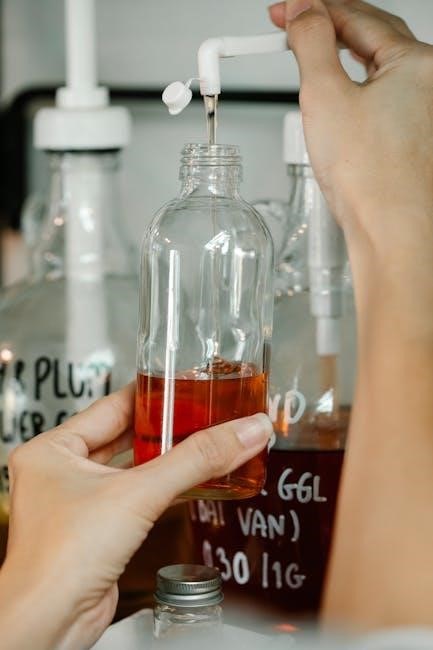
Essential components include the housing, handle, valves, and seals, working together to efficiently draw in, contain, and discharge fluids with reliable performance.
Pump Housing and Materials
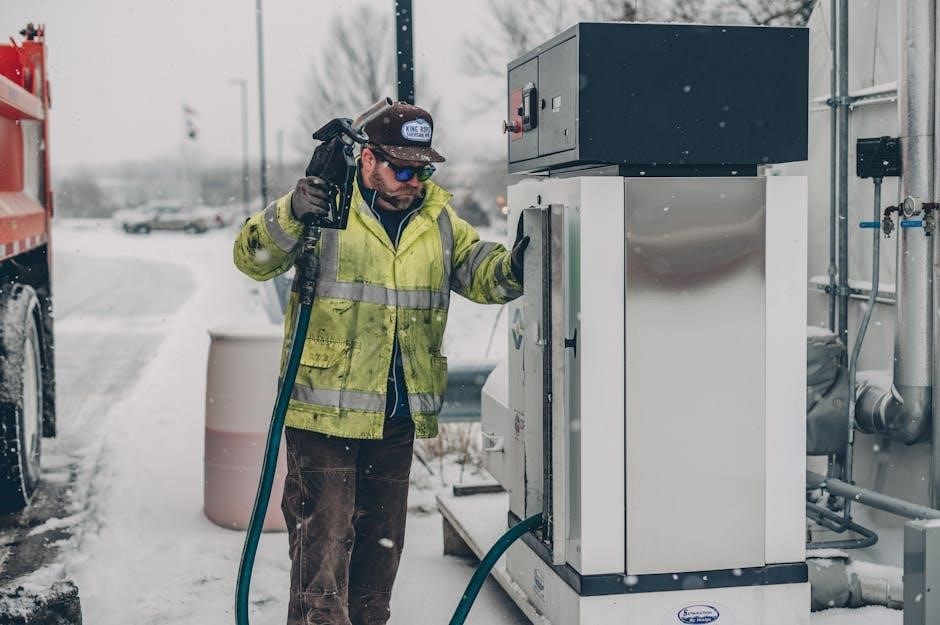
The pump housing serves as the foundational structure, protecting internal components and containing the fluid during operation. Material selection is crucial, dictated by the fluid being pumped and the operating environment. Common materials include cast iron, known for its durability and cost-effectiveness, particularly suitable for water and less corrosive fluids.
However, for aggressive chemicals or sensitive applications, materials like stainless steel, polypropylene, or specialized polymers are preferred, offering superior chemical resistance and preventing contamination. The housing design must withstand pressure fluctuations and ensure a leak-proof seal. Considerations include wall thickness, port configurations, and mounting options. Robust construction minimizes vibration and extends the pump’s lifespan, while appropriate material choices guarantee compatibility and prevent corrosion or degradation, ultimately ensuring reliable performance.
Handle and Lever Mechanisms
The handle and lever mechanisms are the user interface, translating manual force into pumping action. Designs vary, ranging from simple direct-acting levers to more complex linkages offering mechanical advantage. Ergonomics play a vital role; comfortable grips and optimized lever lengths reduce operator fatigue, especially during prolonged use.
Lever ratios determine the force required for operation – a higher ratio means less force but more strokes. Materials commonly used include steel, aluminum, and durable plastics. The connection points between the handle, lever, and pump’s internal mechanism must be robust to withstand repeated stress. Smooth operation and precise control are key features, ensuring consistent fluid delivery. Well-designed mechanisms minimize energy loss and maximize pumping efficiency, contributing to overall pump performance and usability.
Valves: Check Valves and Their Importance
Check valves are integral to the functionality of manual fluid pumps, ensuring unidirectional flow and preventing backflow – a critical aspect for maintaining prime and accurate fluid delivery. These valves automatically open to allow fluid passage in the desired direction and close instantly to block reverse flow, safeguarding the pump and connected systems.
Common types include ball, swing, and diaphragm check valves, each suited to specific fluid characteristics and pressure requirements. Their proper operation is vital for pump efficiency and preventing damage. Regular inspection and maintenance are crucial, as debris or wear can compromise sealing, leading to leakage or reduced performance. Selecting the correct check valve material, compatible with the pumped fluid, is essential for longevity and reliability. Ultimately, check valves guarantee controlled and consistent fluid transfer.
Seals and Gaskets: Preventing Leakage
Effective sealing is paramount in manual fluid pumps, preventing leakage and maintaining optimal performance. Seals and gaskets create a barrier between moving components, containing the pumped fluid and ensuring efficient operation. Materials range from elastomers like nitrile and Viton to PTFE, chosen based on fluid compatibility, temperature, and pressure.
Common seal types include O-rings, lip seals, and mechanical seals, each offering varying levels of sealing capability and durability. Regular inspection is vital, as seals degrade over time due to chemical exposure, abrasion, or temperature fluctuations. Replacing worn seals promptly prevents costly downtime and fluid loss. Proper installation, using appropriate lubricants, extends seal life. A robust sealing system guarantees reliable fluid transfer and protects the pump’s internal components from contamination and damage.

Applications of Manual Fluid Pumps
Manual fluid pumps find widespread use in agriculture, automotive repair, medical settings, and various industrial processes, offering portable and reliable fluid handling solutions.
Agricultural Applications: Irrigation and Spraying
Manual fluid pumps play a crucial role in agricultural settings where access to electricity might be limited or impractical. For irrigation, these pumps efficiently deliver water to crops, particularly in small-scale farming or remote locations, enabling targeted watering and conserving precious resources. They are especially valuable for transferring water from wells, streams, or storage tanks to irrigation systems like drip lines or sprinklers.
Furthermore, manual pumps are extensively used for spraying pesticides, herbicides, and fertilizers. Their portability allows farmers to easily apply these treatments across fields, ensuring even distribution and maximizing crop protection. The controlled flow rate offered by these pumps minimizes waste and promotes responsible chemical application. These pumps are a cost-effective and reliable solution for maintaining healthy crops and optimizing agricultural yields, especially in areas lacking extensive infrastructure.
Automotive Industry: Oil and Coolant Transfer
Manual fluid pumps are indispensable tools within the automotive industry, primarily utilized for the efficient transfer of essential fluids like motor oil and engine coolant. During oil changes, these pumps facilitate the swift and clean removal of old oil from the engine and the subsequent introduction of fresh lubricant, ensuring optimal engine performance and longevity. Their hand-operated nature eliminates the need for electricity, making them ideal for garage or roadside use.

Similarly, manual pumps are employed to drain and refill coolant systems, preventing overheating and maintaining proper engine temperature regulation. They offer a controlled and mess-free method for fluid exchange, minimizing the risk of spills and environmental contamination. The portability and simplicity of these pumps make them a valuable asset for mechanics and automotive enthusiasts alike, streamlining maintenance procedures and enhancing vehicle reliability.
Medical Applications: Fluid Delivery Systems
Manual fluid pumps play a critical, yet often understated, role in various medical applications, particularly within fluid delivery systems. These pumps are frequently utilized for administering medications, intravenous fluids, and nutritional solutions where precise and controlled delivery is paramount. Their simplicity and reliability make them suitable for scenarios where electricity is unavailable or undesirable, such as emergency medical situations or resource-limited settings.
Furthermore, manual pumps are employed in specialized procedures like blood transfusions and localized drug delivery, offering healthcare professionals a dependable means of managing fluid transfer. The ability to regulate flow rates manually ensures patient safety and treatment efficacy. These pumps contribute significantly to accurate dosage and minimize the risk of complications, supporting effective patient care across a broad spectrum of medical disciplines.
Industrial Applications: Chemical Transfer
Manual fluid pumps are invaluable in industrial applications, specifically for the safe and efficient chemical transfer of various substances. These pumps excel in environments where electrical hazards exist or power sources are inaccessible, providing a reliable alternative for moving corrosive, volatile, or hazardous chemicals. Their robust construction and compatibility with diverse fluids make them ideal for tasks like transferring acids, solvents, and cleaning agents.
Moreover, manual pumps offer a cost-effective solution for smaller-scale chemical handling, reducing the need for complex and expensive automated systems. They are frequently used for drum transfer, sample collection, and dispensing chemicals in laboratories and manufacturing facilities, ensuring controlled and precise fluid movement while prioritizing worker safety and operational efficiency.
Maintenance and Troubleshooting
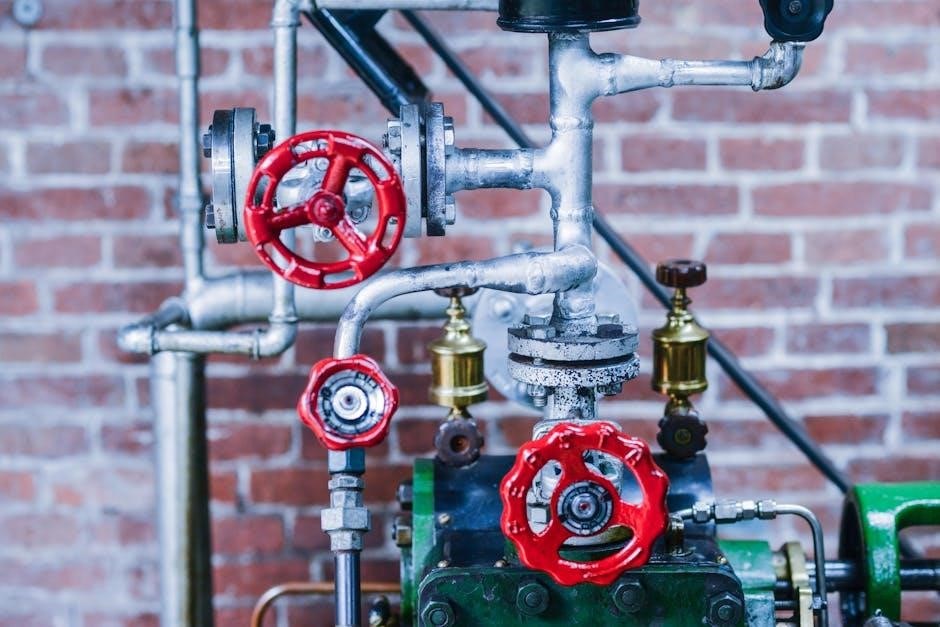
Regular maintenance, including cleaning and lubrication, is crucial for optimal performance; addressing common issues promptly extends the lifespan of your manual fluid pump.
Common Issues and Solutions
Reduced Flow Rate: A common problem often stems from clogged valves or a worn piston/diaphragm. Inspect and clean valves meticulously, replacing them if necessary. Examine the piston or diaphragm for cracks or deterioration, and replace if found.
Leakage: Leakage typically indicates worn seals or gaskets. Carefully inspect all seals and gaskets for damage, replacing them with compatible materials. Ensure proper tightening of connections to prevent fluid escape.
Handle Stiffness: Stiffness can arise from lack of lubrication or internal friction. Apply appropriate lubricant to moving parts, and check for any obstructions hindering smooth operation.
Pump Not Priming: Air trapped within the pump can prevent priming. Ensure all connections are airtight and manually prime the pump by filling the inlet with fluid before operation.
Inconsistent Pumping: This may indicate air leaks in the suction line or a faulty check valve. Inspect the suction line for cracks and ensure the check valve is functioning correctly.
Cleaning and Lubrication
Regular cleaning is crucial for maintaining optimal pump performance. After each use, flush the pump with a compatible solvent to remove any residual fluid, preventing corrosion and buildup. Disassemble components periodically for a thorough cleaning, paying close attention to valves and seals.
Lubrication minimizes friction and extends pump lifespan. Apply a manufacturer-recommended lubricant to all moving parts, including the piston/diaphragm, handle joints, and valve stems. Avoid using abrasive lubricants that could damage seals.
Seal Protection: When cleaning, avoid harsh chemicals that can degrade seals and gaskets. Use mild detergents and ensure complete rinsing. Regularly inspect seals for wear and tear, replacing them as needed to prevent leakage.
Storage: Before long-term storage, thoroughly clean and lubricate the pump. Store it in a dry, clean environment to prevent corrosion and damage.
Extending the Lifespan of Your Pump
Proper handling is paramount for longevity. Avoid dropping or subjecting the pump to excessive force. Always use the handle and lever mechanisms as intended, preventing strain on internal components. Store the pump in a clean, dry environment, shielded from extreme temperatures and direct sunlight.
Regular inspections can identify potential issues early. Check for leaks, cracks, or signs of wear on seals, hoses, and the pump housing. Address any problems promptly to prevent further damage.
Fluid Compatibility: Ensure the fluid being pumped is compatible with the pump’s materials. Using incompatible fluids can cause corrosion or degradation of internal parts.
Consistent Maintenance: Adhering to a regular cleaning and lubrication schedule, as previously outlined, significantly extends the pump’s operational life and maintains its efficiency.

Future Trends in Manual Pump Technology
Innovations focus on advanced materials for increased efficiency, alongside ergonomic designs enhancing user comfort and reducing strain during prolonged manual operation.
Materials Science and Pump Efficiency
Advancements in materials science are poised to revolutionize manual fluid pump technology, significantly boosting overall efficiency and durability. Traditional materials like cast iron and steel are gradually being replaced, or augmented, with high-performance polymers, advanced ceramics, and specialized alloys.
These newer materials offer reduced weight, enhanced corrosion resistance, and lower friction coefficients, directly translating to easier operation and minimized energy loss. For instance, utilizing polymers in pump housings can decrease weight while maintaining structural integrity. Simultaneously, ceramic components within valve assemblies can provide superior wear resistance, extending the pump’s lifespan and maintaining consistent flow rates.
Furthermore, research into self-lubricating materials aims to reduce the need for external lubrication, simplifying maintenance and minimizing contamination risks, particularly crucial in medical and food processing applications. The integration of nanotechnology promises even greater control over material properties, potentially leading to pumps with unprecedented efficiency and performance characteristics.
Ergonomic Design Improvements
Ergonomic considerations are becoming increasingly vital in the evolution of manual fluid pump design, focusing on user comfort, reduced strain, and enhanced operational efficiency. Traditional pump handles and lever mechanisms often require significant physical effort, potentially leading to fatigue and repetitive strain injuries.
Modern designs are incorporating features like adjustable handle lengths, optimized grip geometries, and force-assisted lever systems to minimize the exertion needed for operation. Soft-grip materials and vibration dampening technologies further contribute to user comfort, especially during prolonged use. The goal is to create pumps that feel intuitive and require minimal effort to operate effectively.
Furthermore, research is exploring alternative actuation methods, such as rocker mechanisms and rotary handles, to distribute the workload more evenly across different muscle groups. These improvements not only enhance user experience but also increase productivity and reduce the risk of workplace injuries, making manual pumps more accessible and sustainable.