Cubital Tunnel Syndrome Exercises: A Comprehensive Guide
Navigating cubital tunnel syndrome requires targeted exercises, focusing on nerve gliding, range of motion, and strengthening—all crucial for effective symptom management and recovery.
Understanding Cubital Tunnel Syndrome
Cubital tunnel syndrome arises from compression of the ulnar nerve as it passes through the cubital tunnel—a space on the inner side of your elbow. This nerve controls movement and sensation in your forearm and hand, including your pinky and ring fingers. Understanding the condition is the first step towards effective management. Symptoms often begin with numbness and tingling in these fingers, potentially worsening with elbow bending.
The tunnel itself is formed by bone, muscle, and ligaments; Anything reducing space within this tunnel, or increasing pressure on the nerve, can lead to irritation and ultimately, cubital tunnel syndrome. It’s crucial to differentiate this from other conditions causing similar symptoms, like carpal tunnel syndrome. Early diagnosis and appropriate exercises, as outlined in resources like downloadable PDFs, are vital for preventing long-term nerve damage and restoring function.
What Causes Cubital Tunnel Syndrome?
Several factors can contribute to the development of cubital tunnel syndrome. Direct trauma to the elbow, such as from a fall or repeated leaning, is a common cause, increasing pressure on the ulnar nerve. Anatomical variations, like a smaller cubital tunnel, can predispose individuals to the condition. Repetitive elbow bending and prolonged static positions, particularly those involving forearm pronation, also play a significant role.
Certain occupations or activities—like tennis or jobs requiring frequent elbow flexion—can exacerbate the problem. Bone spurs or arthritis in the elbow joint can narrow the tunnel space. While exercises detailed in cubital tunnel syndrome PDFs can help manage symptoms, understanding the underlying cause is crucial for prevention and long-term relief. Addressing contributing factors, alongside targeted exercises, is key to successful treatment.
Symptoms of Cubital Tunnel Syndrome
The hallmark of cubital tunnel syndrome is numbness and tingling in the little finger and ring finger, often radiating up the forearm. Many individuals experience these sensations, particularly when the elbow is bent for extended periods, like during sleep or while talking on the phone. Weakness in the hand, specifically grip strength, can develop as the condition progresses.
Some may notice clumsiness or difficulty with fine motor skills. Pain around the elbow is also common, though not always present. A cubital tunnel syndrome PDF will often detail symptom progression; early intervention is vital. Ignoring symptoms can lead to muscle atrophy in the hand. Recognizing these signs prompts seeking evaluation and initiating appropriate exercises and management strategies.

Exercises for Cubital Tunnel Syndrome Relief
Targeted exercises are essential for alleviating cubital tunnel syndrome, enhancing nerve function, and restoring arm strength—a cornerstone of any effective treatment plan.
Gentle Range of Motion Exercises
Initiating treatment often involves gentle range of motion exercises to maintain flexibility and prevent stiffness in the elbow and wrist. These movements should be performed slowly and deliberately, avoiding any pain. One key exercise is Elbow Flexion and Wrist Extension: sit tall, extend your arm, and flex your hand upwards while bending your elbow towards your shoulder, repeating five times.
Another beneficial exercise is Arm Flexion in Front of Body. Begin seated, extending your arm straight forward, then bend your elbow, bringing your wrist towards your face. Repeat this motion slowly, aiming for 5-10 repetitions. Additionally, a Head Tilt can be incorporated; with your arm extended, tilt your head away from your hand, feeling a gentle stretch, and repeat five times. These exercises promote circulation and nerve mobility, easing discomfort.
Elbow Flexion and Wrist Extension
This exercise aims to improve both elbow and wrist mobility, crucial for alleviating cubital tunnel syndrome symptoms. Begin by sitting upright with good posture. Extend your affected arm out to the side, ensuring it’s level with your shoulder, and position your hand facing downwards. Next, flex your hand, pulling your fingers upwards towards the ceiling, maintaining a controlled movement.
Simultaneously, bend your elbow, bringing your hand closer to your shoulder. Focus on a smooth, deliberate motion, avoiding any sharp or sudden movements. Repeat this sequence slowly five times, paying attention to any sensations. This exercise gently stretches the ulnar nerve and surrounding tissues, promoting flexibility and reducing compression. Remember to stop if you experience increased pain or discomfort.
Arm Flexion in Front of Body
This exercise focuses on gently stretching the ulnar nerve by combining elbow flexion with wrist movement. Start by sitting with a straight back and extending your affected arm straight out in front of you, keeping your elbow straight and at shoulder height. Extend your hand away from your body, pointing your fingers towards the floor.
Slowly bend your elbow, bringing your wrist towards your face. Maintain a controlled motion throughout the exercise, avoiding any jerky movements. Repeat this process slowly 5 to 10 times, concentrating on the stretch felt along the inner elbow and forearm. This movement helps to mobilize the ulnar nerve and improve its gliding motion within the cubital tunnel. Stop immediately if you feel any increased pain or numbness.
Nerve Gliding Exercises
Nerve gliding exercises are a cornerstone of cubital tunnel syndrome treatment, aiming to restore smooth nerve movement within the cubital tunnel. These exercises don’t stretch the nerve directly, but rather encourage it to glide freely through the surrounding tissues. This helps reduce compression and alleviate symptoms like numbness and tingling.
It’s crucial to perform these exercises gently and slowly, stopping immediately if you experience increased pain or discomfort. We will explore both basic and advanced techniques. Starting with the basic glides is recommended, progressing to the advanced variations as tolerated. Consistent, careful execution is key to maximizing benefits and avoiding further irritation of the ulnar nerve.
Ulnar Nerve Glides ౼ Basic
The basic ulnar nerve glide involves a sequence of movements designed to gently mobilize the nerve. Begin with your arm extended, palm facing up, and fingers pointing towards the ceiling. Gently bend your wrist downwards, extending your fingers. Next, bend your elbow, bringing your hand towards your shoulder while maintaining the wrist and finger positions.
Simultaneously, slightly tilt your head away from the affected side. This adds a gentle stretch along the nerve pathway. Slowly straighten your elbow and return to the starting position. Repeat this sequence 5-10 times, focusing on smooth, controlled movements. Avoid any forceful pulling or stretching. Listen to your body and stop if you feel increased pain.
Ulnar Nerve Glides ౼ Advanced
The advanced ulnar nerve glide builds upon the basic technique, incorporating additional movements for a more comprehensive mobilization. Start with your arm extended, palm up, and fingers pointing upwards. Simultaneously, bend your wrist and elbow, bringing your hand towards your shoulder.
Now, add shoulder depression (bringing your shoulder down and back) and a slight rotation of your forearm outwards. Gently tilt your head away from the affected side. Slowly reverse the movements, returning to the starting position. Repeat 5-10 times, maintaining smooth, controlled motions. This version requires greater coordination and range of motion.
Pay close attention to your body, and discontinue if you experience increased discomfort or pain.
Strengthening Exercises (When Appropriate)
Strengthening exercises are introduced cautiously, only after inflammation has subsided and nerve gliding is well-tolerated. Focus initially on wrist extension, using a light dumbbell (1-2 lbs) or resistance band. Slowly extend your wrist upwards, keeping your forearm supported. Perform 10-15 repetitions, 2-3 sets.
Forearm pronation/supination strengthens the muscles controlling rotation. Hold a light weight or resistance band and slowly rotate your forearm palm-up (supination) and then palm-down (pronation). Again, aim for 10-15 repetitions, 2-3 sets.
These exercises improve support around the elbow and wrist, but avoid overexertion; Stop if pain increases. Gradual progression is key.
Wrist Extension Strengthening
Wrist extension strengthening aims to support the forearm muscles, indirectly aiding the ulnar nerve. Begin seated with your forearm resting on a table, palm down, and your wrist extending beyond the edge. Hold a light dumbbell (1-2 lbs) or utilize a resistance band looped around your wrist.
Slowly lift your hand upwards, extending your wrist against the resistance. Maintain a controlled motion, avoiding any jerking. Focus on feeling the contraction in your forearm muscles; Hold the extended position briefly, then slowly lower your hand back to the starting position.
Perform 10-15 repetitions for 2-3 sets. Stop immediately if you experience increased pain or tingling. Gradual increases in weight or resistance are recommended as strength improves.
Forearm Pronation/Supination Strengthening
Strengthening forearm pronation and supination – the rotational movements of your forearm – can contribute to overall arm stability and indirectly benefit the ulnar nerve. Sit comfortably with your elbow bent at 90 degrees and held close to your body. Hold a light dumbbell (1-2 lbs) or a hammer in your hand.
Slowly rotate your forearm so your palm faces upwards (supination), then downwards (pronation). Maintain a controlled movement throughout the exercise, focusing on the muscles in your forearm. Avoid using momentum to swing the weight.
Complete 10-15 repetitions for 2-3 sets. Discontinue if pain increases. Gradually increase the weight as your strength improves, ensuring proper form is maintained throughout each repetition.

Do’s and Don’ts for Managing Symptoms
Prioritize minimizing elbow leaning, avoiding direct trauma, and limiting aggravating activities like tennis; proper bracing and targeted exercises are beneficial for healing.
Activities to Avoid
Managing cubital tunnel syndrome effectively necessitates identifying and avoiding activities that exacerbate symptoms. Bicep curls, due to their significant strain on the forearm tendons, should be avoided as they can irritate the cubital tunnel. Similarly, any activity involving direct trauma to the elbow area – impacts, falls, or repetitive jarring motions – must be curtailed to prevent further nerve compression.
Prolonged periods of elbow bending, such as sustained computer work with improper posture or extended phone use, can also aggravate the condition. High-impact activities like tennis, which involve forceful gripping and repetitive arm movements, should be limited or modified. It’s crucial to listen to your body and cease any activity that reproduces or intensifies pain, numbness, or tingling in the arm and hand. Prioritizing rest and avoiding these triggers is paramount for successful symptom management and recovery.
Bicep Curls & Heavy Lifting
Bicep curls and heavy lifting are particularly problematic for individuals with cubital tunnel syndrome. These exercises place remarkable strain on the tendons attaching to the radius bone along the cubital tunnel, potentially causing irritation and inflammation. The forceful contraction of the biceps muscle increases pressure on the ulnar nerve, exacerbating existing symptoms like numbness and tingling in the fingers.
Heavy lifting, regardless of the muscle group targeted, can similarly compress the ulnar nerve due to the increased load and altered biomechanics at the elbow. Avoiding these activities is crucial during the acute phase of the condition and even during recovery. Modifications or alternative exercises focusing on lighter weights and different muscle groups should be considered under the guidance of a physical therapist to prevent further nerve aggravation and promote healing.
Activities with Direct Elbow Trauma

Direct trauma to the elbow region poses a significant risk for individuals managing cubital tunnel syndrome. Any activity involving a forceful impact or repeated pressure on the elbow can worsen nerve compression and inflammation. This includes contact sports like football or basketball, where accidental collisions are common, as well as activities involving frequent leaning or bumping of the elbow.

Even seemingly minor incidents, such as repeatedly hitting the elbow against hard surfaces, can contribute to symptom flare-ups. Protecting the elbow from such impacts is paramount. Utilizing protective gear during sports or modifying daily activities to minimize the risk of trauma are essential preventative measures. Avoiding activities that predictably cause elbow impacts is crucial for managing the condition and preventing further nerve damage.
Prolonged Elbow Bending
Sustained elbow flexion is a key aggravating factor in cubital tunnel syndrome, increasing pressure on the ulnar nerve within the cubital tunnel. Activities requiring prolonged bending, such as extended phone use, reading with the elbow bent, or sleeping with the arm flexed, should be minimized. Maintaining a straightened or slightly bent elbow position reduces nerve compression and allows for better blood flow.
Habitual postures that involve constant elbow bending can exacerbate symptoms and hinder recovery. Consciously adjusting these habits – using a headset for phone calls, propping up reading material, or sleeping with the arm extended – can provide significant relief. Avoiding prolonged static positions is vital, and incorporating frequent breaks to straighten the elbow is highly recommended for symptom management.
Ergonomic Adjustments & Posture
Optimizing your workspace and daily posture are crucial components of managing cubital tunnel syndrome. Minimizing leaning on your elbow, particularly during work, driving, or even while relaxing in bed, significantly reduces nerve compression. Adjust your chair height and desk setup to promote a neutral arm position, avoiding excessive bending or extension of the elbow.
Consciously maintaining elbow straightness during rest and sleep is also vital. Consider using pillows to support your arm in a straighter position. Proper posture, both seated and standing, helps prevent unnecessary strain on the ulnar nerve. Small adjustments to your environment and habits can make a substantial difference in alleviating symptoms and promoting healing.
Minimizing Elbow Leaning
A key strategy in managing cubital tunnel syndrome is actively reducing pressure on the elbow. This means consciously avoiding leaning on your elbow, a common habit during work, while driving, or even when relaxing. Prolonged leaning compresses the ulnar nerve within the cubital tunnel, exacerbating symptoms like numbness and tingling.
Be mindful of surfaces you rest your elbow on – desks, armrests, and even your own body can contribute to compression. Adjust your workspace to eliminate the need to lean. Consider using an ergonomic chair with adjustable armrests that don’t force your elbows into a bent position. Small, consistent changes in your daily habits can significantly reduce nerve irritation and promote healing.
Maintaining Elbow Straightness During Rest
Protecting the ulnar nerve during sleep and rest is paramount for cubital tunnel syndrome relief. Avoid bending your elbow deeply for extended periods, as this significantly increases pressure within the cubital tunnel. A simple yet effective technique is to keep your arm relatively straight while lying down.
Consider using a pillow to support your arm in a straighter position, preventing it from naturally bending during sleep. Some individuals find benefit from wearing an elbow brace at night to maintain this alignment. This minimizes nerve compression and allows for uninterrupted healing. Consistent attention to elbow positioning during rest can dramatically reduce nighttime symptoms and improve overall recovery.
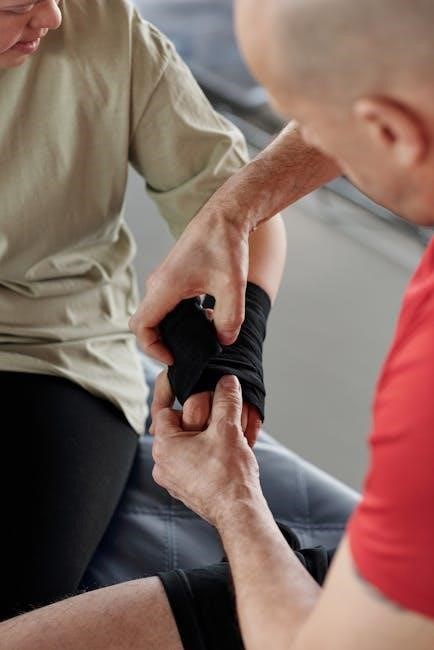
Supportive Measures
Beyond exercises, supportive care like bracing and physical therapy are vital. Seeking professional guidance ensures proper treatment and accelerates healing for lasting relief.
Elbow Bracing
Elbow bracing plays a significant supportive role in managing cubital tunnel syndrome, particularly during activities that aggravate symptoms or overnight while sleeping. Braces help to maintain the elbow in a slightly flexed position, preventing full extension which can compress the ulnar nerve within the cubital tunnel.
There are various types of braces available, ranging from simple sleeves to more rigid designs with hinges. The choice depends on the severity of your condition and the level of support needed. A soft elbow sleeve can provide gentle compression and proprioceptive feedback, while a more structured brace offers greater stability.
Proper brace fitting is crucial; it shouldn’t be too tight, restricting circulation, or too loose, offering insufficient support. Consistent use, as recommended by a healthcare professional, can minimize ulnar nerve damage and promote healing, allowing for more comfortable daily function and facilitating the effectiveness of prescribed exercises.
Importance of Physical Therapy
Physical therapy is paramount in effectively addressing cubital tunnel syndrome, offering a structured and personalized approach to recovery. A qualified physical therapist will conduct a thorough evaluation to pinpoint the specific causes of your symptoms and design a tailored exercise program. This program typically incorporates nerve gliding exercises to improve ulnar nerve mobility, range-of-motion exercises to restore flexibility, and strengthening exercises to support the surrounding muscles.
Beyond exercises, a physical therapist provides crucial education on proper posture, ergonomic adjustments, and activity modification to prevent symptom recurrence. They can also employ manual therapy techniques to address soft tissue restrictions and joint imbalances.
Consistent adherence to the therapy plan is vital for optimal outcomes. A physical therapist will monitor your progress, adjust the program as needed, and empower you with the tools to manage your condition long-term, promoting lasting relief and improved function.
When to Seek Professional Help
While initial self-management with gentle exercises can be beneficial, recognizing when to seek professional help is crucial for preventing long-term complications. Consult a healthcare professional if your symptoms—numbness, tingling, pain—persist or worsen despite home remedies. Specifically, seek immediate attention if you experience significant weakness in your hand or fingers, or if you notice muscle wasting in your forearm.
These symptoms could indicate severe nerve compression requiring more aggressive intervention. A doctor can accurately diagnose your condition, rule out other potential causes, and recommend the most appropriate treatment plan.
Early intervention often leads to better outcomes, potentially avoiding the need for surgery. Don’t hesitate to consult a physician or physical therapist if you’re concerned about your symptoms or if they interfere with your daily activities.

Resources & Further Information
Accessing reliable information and qualified professionals is key; explore online resources and seek guidance from experienced physical therapists for optimal care.
Finding a Qualified Physical Therapist
Locating a skilled physical therapist is paramount for successful cubital tunnel syndrome management. Seek therapists specializing in hand and upper extremity rehabilitation, demonstrating expertise in nerve gliding techniques and targeted exercises. Verify their credentials, ensuring they are licensed and possess relevant certifications, such as those from the American Society of Hand Therapists (ASHT).
During your initial consultation, discuss their experience treating cubital tunnel syndrome specifically, and inquire about their approach to exercise prescription. A good therapist will conduct a thorough evaluation, tailoring a program to your individual needs and symptom severity. Don’t hesitate to ask about their success rates and treatment philosophy.
Online directories, physician referrals, and hospital outpatient departments are excellent resources for finding qualified professionals. Prioritize therapists who emphasize patient education and empower you to actively participate in your recovery journey.
Reliable Online Resources for Cubital Tunnel Syndrome
Accessing trustworthy online information is vital for understanding and managing cubital tunnel syndrome. The American Society of Hand Surgeons (handcare.org) provides comprehensive details on conditions, treatments, and finding qualified surgeons.
Healthline (healthline.com/health/cubital-tunnel-syndrome) offers accessible articles on symptoms, exercises (like those mentioned previously – elbow flexion, nerve glides), and self-care strategies. Mayo Clinic (mayoclinic.org) delivers evidence-based information on causes, diagnosis, and treatment options.

Be cautious of forums and anecdotal accounts; prioritize resources from reputable medical organizations. Always discuss any information found online with your healthcare provider before making treatment decisions. Remember, online resources supplement, but do not replace, professional medical advice.