Benson’s manual is a widely used resource for microbiology students, offering practical lab exercises and detailed guidance. It’s available in concise and full versions.
Published since 2014, it provides a comprehensive approach to learning essential microbiological techniques, aiding both beginners and advanced learners.
Overview of the Manual’s Purpose
Benson’s Microbiological Applications Laboratory Manual serves as a foundational guide for students engaging in hands-on microbiology learning. Its primary purpose is to equip learners with the practical skills and knowledge necessary to confidently perform essential laboratory procedures.
The manual bridges the gap between theoretical concepts and real-world application, fostering a deeper understanding of microbiological principles. It aims to provide a structured and reliable framework for conducting experiments, analyzing results, and interpreting data.
Through detailed instructions and user-friendly diagrams, the manual empowers students to master techniques in bacteriology, mycology, and parasitology. It’s designed to cultivate critical thinking and problem-solving abilities within the context of a laboratory setting, preparing students for future endeavors in the field.

Target Audience: Students and Educators
Benson’s manual is specifically designed for both students and educators within microbiology courses, ranging from introductory to advanced levels. It caters to undergraduate students seeking practical lab experience and serves as a valuable resource for instructors needing a reliable and comprehensive lab guide.
The manual’s clear instructions and well-illustrated exercises make it accessible to students with varying levels of prior knowledge. Educators benefit from the manual’s tested and reliable exercises, streamlining lab preparation and ensuring consistent results.
Its adaptability allows for integration into diverse curricula, supporting effective teaching and learning in microbiology. The manual’s availability also extends to self-study, benefiting individuals pursuing independent learning.
Editions and Versions Available (Concise vs. Full)
Benson’s Microbiological Applications Laboratory Manual is available in multiple editions, with the 14th and 15th editions being prominent. A key feature is the availability of both a Concise Version and a Full Version to suit different course needs.
The Concise Version, (ISBN: 9781259705236) offers a streamlined set of experiments, ideal for shorter lab courses or introductory microbiology. The full version provides a more extensive range of exercises for comprehensive study.
Digital formats, like PDFs, are accessible through platforms like the Internet Archive, enhancing convenience. Recent revisions maintain core strengths while incorporating current microbiology practices, ensuring relevance and accuracy.
Core Principles and Features
Benson’s manual excels with user-friendly diagrams, clear instructions, and reliable exercises; These features support effective learning for both beginning and advanced microbiology students.
User-Friendly Diagrams and Illustrations
Benson’s Microbiological Applications Laboratory Manual prioritizes visual learning through exceptionally clear and easily understandable diagrams and illustrations. These visuals aren’t merely decorative; they are integral to grasping complex microbiological concepts and procedures.
Students consistently praise the manual’s ability to break down intricate techniques into manageable, step-by-step visual guides. This approach minimizes confusion and fosters a deeper comprehension of the material. The diagrams effectively demonstrate experimental setups, microbial structures, and identification processes.
The illustrations are designed to be easily followed, even for those new to the field, enhancing the overall learning experience and promoting successful lab outcomes. They truly are a cornerstone of the manual’s effectiveness.
Clear and Concise Experimental Instructions
Benson’s Microbiological Applications Laboratory Manual excels in providing remarkably clear and concise experimental instructions. Each procedure is meticulously outlined, ensuring students can confidently navigate laboratory exercises with minimal ambiguity. The language used is straightforward and avoids unnecessary jargon, making it accessible to learners of all levels;
Instructions are presented in a logical, step-by-step format, facilitating easy replication and understanding. This clarity reduces the potential for errors and promotes accurate results. The manual’s focus on precision ensures students develop strong technical skills and a solid foundation in microbiological techniques.
This feature is consistently highlighted as a key strength by both students and educators.
Reliable and Tested Exercises
Benson’s Microbiological Applications Laboratory Manual is renowned for its collection of reliable and thoroughly tested exercises. These aren’t simply theoretical concepts; they are practical, hands-on activities designed to reinforce learning and build essential skills. Each exercise has been vetted for accuracy and consistency, ensuring students achieve meaningful and dependable results.
The manual offers an excellent array of exercises suitable for both beginning and advanced microbiology courses, catering to diverse learning needs. These exercises cover a broad spectrum of microbiological techniques, providing a comprehensive learning experience.
This commitment to reliability makes it a trusted resource for educators and students alike.

Key Areas of Microbiological Study Covered
Benson’s manual expertly covers bacteriology, mycology, and parasitology, providing detailed techniques for cultivation, identification, and examination of diverse microorganisms.
Bacteriology: Techniques and Identification
Benson’s laboratory manual provides a robust foundation in bacteriological principles and practices. Students gain hands-on experience with essential techniques like culturing and isolating bacteria from various sources, utilizing both selective and differential media.
The manual details crucial identification methods, including microscopic observation, staining procedures – such as Gram staining – and biochemical tests to characterize bacterial species.
Specific examples, like Staphylococcus, are often included in exercises, allowing students to apply learned techniques to real-world scenarios. The manual emphasizes accurate observation and interpretation of results, fostering critical thinking skills essential for successful bacterial identification and analysis.
Mycology: Fungal Cultivation and Analysis
Benson’s manual dedicates significant attention to the study of fungi, covering essential techniques for their cultivation and analysis. Students learn to prepare and inoculate various fungal media, observing colony morphology and identifying key characteristics.
The manual guides users through microscopic examination of fungal structures, including spores and hyphae, aiding in accurate identification. Techniques for isolating fungi from environmental samples are detailed, providing practical experience.
Emphasis is placed on differentiating between various fungal groups based on observable traits and reproductive structures. This section equips students with the skills to confidently approach fungal identification and understand their ecological roles.
Parasitology: Examination of Parasitic Organisms
Benson’s laboratory manual provides a foundational understanding of parasitology, focusing on the identification and study of parasitic organisms. Students gain experience preparing samples for microscopic examination, including fecal smears and stained slides, to detect parasitic stages.
The manual details techniques for differentiating between various parasitic species based on morphological characteristics, such as size, shape, and internal structures. Emphasis is placed on recognizing parasitic eggs, larvae, and adult forms.
Practical exercises guide students through the identification of common intestinal parasites and those transmitted by vectors, fostering skills crucial for diagnostic microbiology and public health applications.
Specific Techniques Detailed in the Manual
Benson’s manual thoroughly covers essential techniques like sterilization, disinfection, microscopic staining, and observation, alongside detailed protocols for culturing and isolating microorganisms.
Sterilization and Disinfection Methods
Benson’s Microbiological Applications laboratory manual provides comprehensive coverage of crucial sterilization and disinfection techniques vital for maintaining a pure culture environment. The manual details various methods, ensuring students understand the principles behind eliminating microbial contamination.
It explores physical methods like autoclaving, utilizing high-pressure steam to achieve complete sterilization, and dry heat sterilization for materials sensitive to moisture. Chemical disinfection methods, including the use of alcohols, phenols, and aldehydes, are also thoroughly explained, outlining appropriate concentrations and contact times for effective microbial control.
Furthermore, the manual emphasizes the importance of selecting the correct method based on the specific application and the type of microorganism targeted, promoting safe and effective laboratory practices.
Microscopic Techniques (Staining, Observation)
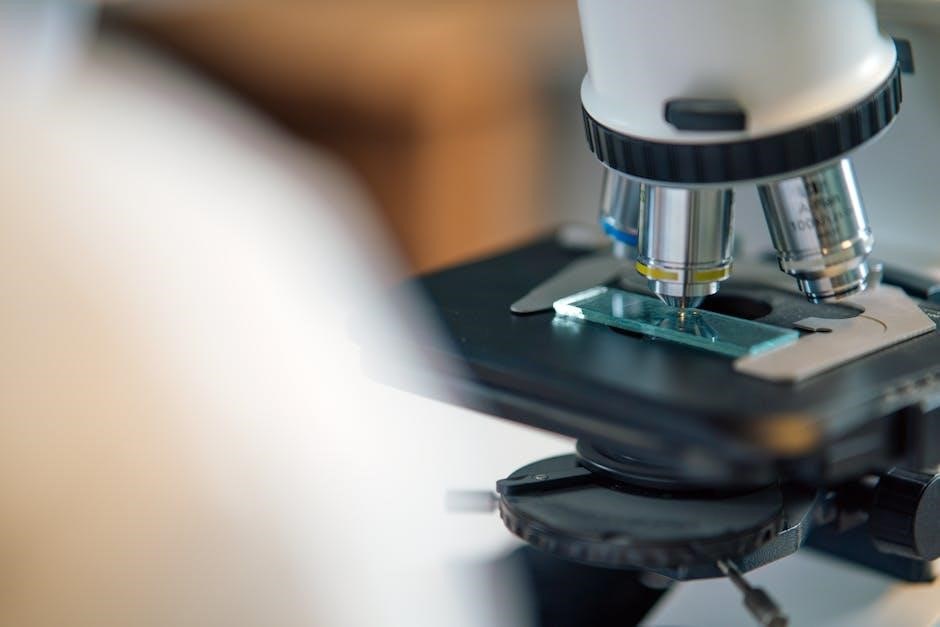
Benson’s manual dedicates significant attention to mastering microscopic techniques, foundational for observing and identifying microorganisms. It provides detailed protocols for preparing samples and utilizing various microscopy methods, including brightfield, phase contrast, and potentially others depending on the edition.
A core focus is on staining procedures. Students learn to perform simple stains to visualize basic morphology, differential stains like Gram staining to categorize bacteria, and specialized stains to highlight specific cellular structures or components.
The manual emphasizes proper slide preparation, focusing techniques, and accurate interpretation of microscopic observations, equipping students with essential skills for characterizing microbial specimens.
Culturing and Isolation of Microorganisms
Benson’s manual thoroughly covers the principles and practices of culturing and isolating microorganisms, crucial skills in microbiology. It details aseptic techniques to prevent contamination, ensuring pure cultures are obtained for accurate study.
Students learn to prepare various culture media – both liquid and solid – tailored to support the growth of different microbial species. The manual guides users through inoculation methods, incubation parameters, and recognizing colony morphology on agar plates.
Isolation techniques, such as streak plating, are explained to obtain single colonies from mixed cultures, enabling further characterization and identification of individual microbial strains.

Recent Updates and Revisions (14th & 15th Editions)
Recent editions maintain the manual’s strengths while enhancing content based on current microbiology practices, ensuring relevance and accessibility for students and educators.
Maintaining Proven Strengths
Benson’s enduring popularity stems from its consistently reliable foundation. The manual retains its hallmark features – user-friendly diagrams that simplify complex concepts, and exceptionally clear, concise experimental instructions. These elements have proven invaluable for students navigating the intricacies of microbiology.
Crucially, the core exercises remain thoroughly tested and dependable, ensuring accurate results and fostering a strong understanding of fundamental techniques. Revisions prioritize preserving this established quality, recognizing the importance of a solid base for learning. The manual continues to offer an excellent array of exercises suitable for both introductory and advanced microbiology courses, solidifying its position as a trusted educational tool.
Enhancements Based on Current Microbiology Practices
Recent editions, particularly the 14th and 15th, incorporate updates reflecting the evolving landscape of microbiology. These enhancements ensure the manual remains relevant and aligned with contemporary laboratory practices. Revisions address emerging techniques and methodologies, providing students with exposure to current industry standards.
The authors strive to integrate the latest advancements while maintaining the manual’s core strengths. This commitment to modernization ensures students are well-prepared for future endeavors in the field. Updates are carefully considered to improve clarity and accuracy, fostering a deeper understanding of microbiological principles and their practical applications in today’s scientific world.
Accessibility and Digital Formats (PDF availability)
Benson’s manual is readily accessible through various platforms, including Amazon and the Internet Archive, catering to diverse learning preferences. Digital formats, specifically PDF versions, are available, enhancing convenience and portability for students. This allows for easy access to materials on multiple devices, facilitating flexible study schedules and remote learning opportunities.
The availability of digital copies supports a wider range of learners and promotes inclusivity. Furthermore, online platforms like the Internet Archive offer borrowing and streaming options, expanding access to the manual beyond traditional purchase methods. This commitment to accessibility ensures the manual remains a valuable resource for microbiology education.

Resources and Supplementary Materials
Benson’s manual is found on Amazon and the Internet Archive, supporting microbiology courses at all levels. Reddit also hosts requests for editions.

Availability on Platforms like Amazon and Internet Archive
Benson’s Microbiological Applications Laboratory Manual is readily accessible through several online platforms, enhancing its usability for students and educators alike. Amazon.com offers both new and used copies, including the concise LooseLeaf version (ISBN 9781259705236), providing convenient purchasing options.
Furthermore, the Internet Archive provides free access to digitized versions of the manual, specifically Bensons microbiological applications : laboratory manual in general microbiology : short version by Alfred E. Brown. This allows for borrowing, streaming, and downloading, expanding access to this valuable resource. The Internet Archive’s offering supports educational purposes and research, making the manual available to a wider audience beyond traditional purchasing methods.
These platforms ensure that students can easily obtain the necessary materials for their microbiology coursework, regardless of their budget or location.
Use in Beginning and Advanced Microbiology Courses
Benson’s Microbiological Applications Laboratory Manual is designed for versatility, effectively serving both introductory and advanced microbiology courses. Its features – user-friendly diagrams, clear instructions, and reliable exercises – cater to a broad range of learning levels. The manual’s adaptability makes it suitable for students initially encountering microbiological techniques, providing a solid foundation in essential skills.
Simultaneously, the depth and breadth of exercises accommodate more advanced students seeking to refine their expertise and explore complex concepts. The manual’s comprehensive coverage allows instructors to tailor assignments to specific course objectives, regardless of the curriculum’s complexity.
This adaptability ensures its continued relevance in diverse educational settings.
Reddit Requests for Specific Editions
Benson’s Microbiological Applications Laboratory Manual frequently appears in requests on platforms like Reddit, specifically the r/PassTheBooks subreddit. Users actively seek specific editions, notably the 15th edition authored by Heidi Smith and Alfred Brown, indicating ongoing demand and reliance on this resource.
These requests highlight the manual’s importance for students across various institutions and the challenges they face in acquiring the correct version. The online community often assists in locating or sharing resources, demonstrating a collaborative spirit among microbiology learners.
The consistent presence of these requests underscores the manual’s continued relevance and the need for accessible editions.