Danby Portable AC Manual: Troubleshooting & Maintenance
Navigating this guide ensures optimal performance of your Danby portable AC, addressing cooling issues, compressor concerns, and maintenance routines for lasting efficiency.
Danby portable air conditioners offer a convenient cooling solution for individual rooms, providing respite from heat without the complexities of central air installation. These units are designed for ease of use and mobility, allowing you to direct cool air where it’s needed most. Understanding the core components and operational principles of your Danby AC is crucial for effective troubleshooting and maintenance.
Danby models typically include a compressor, condenser coils, an evaporator, a fan, and a control panel. The refrigerant circulates through the system, absorbing heat from the room and releasing it outside via the exhaust hose; Proper ventilation is key; the exhaust hose must be vented to the exterior to efficiently remove warm air. Regular maintenance, such as filter cleaning, ensures optimal performance and extends the lifespan of your unit. This manual will guide you through common issues and preventative care.

Understanding Your Danby Model Number
Your Danby portable air conditioner’s model number is essential for accessing specific information, parts, and support resources. Located on the unit’s label – typically on the back or side – it provides a detailed breakdown of the AC’s features and specifications. For example, a model like DPA060BACBDB reveals key characteristics.

The prefix (DPA) indicates a portable air conditioner. The subsequent numbers (060) often represent the cooling capacity in BTU (British Thermal Units). Letters following denote specific features like ‘B’ for black finish, ‘A’ for auto-restart, ‘C’ for control panel type, and ‘D’ for drain type. Knowing this code allows you to quickly find the correct replacement filters, hoses, or consult targeted troubleshooting guides on the Danby website or when contacting customer support. Accurate model identification streamlines the repair process.
Safety Precautions & Warnings
Prioritize safety when operating your Danby portable AC. Always ensure the unit is plugged into a grounded outlet, avoiding extension cords which can overheat. Never operate a damaged power cord or plug. Keep the AC away from flammable materials and water sources to prevent electric shock or fire hazards.
Proper ventilation is crucial; do not block the intake or exhaust vents. Regularly inspect the exhaust hose for damage and ensure it’s securely connected. Disconnect the unit before cleaning or performing maintenance. Avoid inserting objects into the vents. If the unit shuts down unexpectedly with flashing lights, discontinue use and consult the troubleshooting section or Danby support. This appliance is not intended for use by individuals with reduced physical, sensory, or mental capabilities.
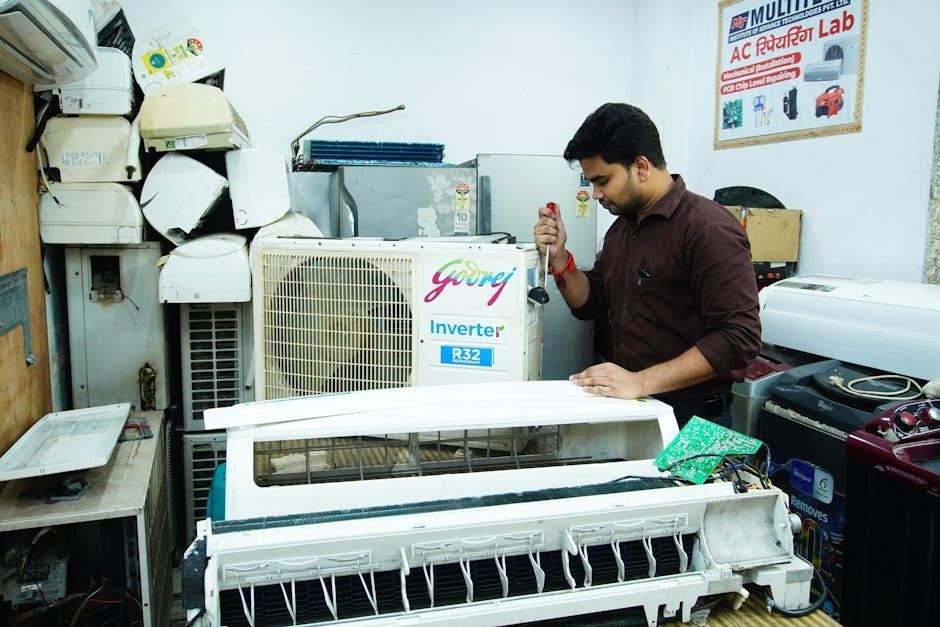
Common Issues & Troubleshooting
Addressing typical problems like insufficient cooling, compressor overheating, or unexpected shutdowns is vital for maintaining your Danby AC’s optimal functionality.
AC Not Cooling Effectively
If your Danby portable AC isn’t delivering sufficient cool air, several factors could be at play. A primary concern is often a clogged air filter, restricting airflow and reducing cooling capacity; regular cleaning is essential. Furthermore, dust buildup on the cooling coils significantly hinders heat exchange, diminishing performance. Accessing and carefully cleaning these coils, though sometimes requiring panel removal (exercise caution to avoid breakage!), is crucial.
Remember that if the room is tightly sealed, insufficient intake air can cause the compressor to overheat and shut off, as it’s exhausting air from a closed space. Also, starting with a very high room temperature, approaching the unit’s safety limit, can also contribute to reduced cooling effectiveness. Addressing these issues proactively will restore optimal cooling performance.
Cleaning the Air Filter
Maintaining a clean air filter is paramount for efficient Danby portable AC operation. Locate the filter, typically behind a removable grille on the unit’s rear or side. Gently remove the filter and inspect it for dust and debris accumulation. For basic cleaning, use a vacuum cleaner with a brush attachment to remove loose particles.
If heavily soiled, the filter can be washed with mild soap and lukewarm water; ensure it’s completely dry before reinstalling. A clogged filter restricts airflow, forcing the unit to work harder and reducing cooling effectiveness. Most Danby models have only one filter, but consistent cleaning – ideally every two weeks during peak usage – is vital for optimal performance and longevity.
Dust Buildup on Cooling Coils
Dust accumulation on the cooling coils significantly hinders your Danby portable AC’s ability to dissipate heat, leading to reduced cooling performance. Accessing the coils often requires removing a rear panel – proceed cautiously to avoid breakage, as some panels can be fragile.
Once accessible, use a soft brush attachment on a vacuum cleaner to gently remove dust. Avoid bending the delicate fins. Alternatively, specialized coil cleaning sprays are available, but follow the product instructions carefully. Regular cleaning – at least once a season – ensures efficient heat exchange and prevents the compressor from overworking. Ignoring this maintenance can lead to compressor overheating and potential unit failure.
Compressor Overheating & Shutting Off
If your Danby portable AC repeatedly shuts off after running for a short period, compressor overheating is a likely cause. This often manifests with flashing lights and beeping sounds, indicating a safety shutdown to prevent damage. A primary contributor is insufficient air intake; ensure the unit isn’t boxed in and has ample space around it for airflow.
Additionally, room temperature too high can strain the compressor. If starting the AC in a very hot room (around 90°F), the compressor may quickly reach its safety limit. Addressing airflow and initial room temperature are crucial first steps. If the issue persists, further investigation into refrigerant levels or blocked exhaust may be necessary.
Insufficient Air Intake
A common reason for Danby portable AC compressor issues is restricted airflow. These units require adequate air intake to operate efficiently and prevent overheating. Ensure the unit isn’t positioned too close to walls, furniture, or curtains, allowing several inches of clearance on all sides. A tightly sealed room exacerbates this problem, as the AC exhausts air without sufficient replacement.
Essentially, you’re trying to cool a closed container. Verify that the intake vents on the back of the unit are unobstructed. If the room lacks natural ventilation, consider slightly opening a window to provide a fresh air source. Proper air intake is vital for preventing the compressor from working excessively hard and shutting down prematurely.
Room Temperature Too High
If your Danby portable AC is struggling, especially during peak heat, the initial room temperature could be the culprit. These units are designed to lower temperatures, not overcome extreme heat immediately. Starting with a room temperature nearing or exceeding 90°F puts significant strain on the compressor, potentially triggering its safety shut-off mechanism.
The unit has a high-limit safety feature to prevent damage from overheating. Attempting to cool an excessively hot room rapidly can overwhelm the AC’s capacity. Consider pre-cooling the space with fans or during cooler hours. Remember, a portable AC’s effectiveness is maximized when the temperature difference isn’t too drastic initially.
Unit Shutting Down with Flashing Lights & Beeping
Experiencing a Danby portable AC shutting down with flashing lights and beeping signals a potential issue requiring attention. This often indicates an internal error detected by the unit’s safety systems. Common causes include low refrigerant levels, though this requires professional diagnosis and repair. More frequently, a blocked exhaust hose restricts airflow, causing the compressor to overheat and trigger the shut-down sequence.
Ensure the exhaust hose is free from kinks, obstructions, and properly connected to the window kit. A tightly sealed room lacking sufficient intake air can also cause this, as the unit exhausts air without replacement. If the problem persists after checking these, professional service is recommended.
Low Refrigerant Levels
If your Danby portable AC unit is shutting down with flashing lights and beeping, low refrigerant levels could be the underlying cause, though this requires professional assessment. Refrigerant is crucial for the cooling process; a leak diminishes its effectiveness, leading to compressor overheating and eventual shutdown as a safety measure. Do not attempt to recharge the refrigerant yourself, as this requires specialized equipment and certification.
Identifying a leak and safely handling refrigerant are tasks best left to qualified HVAC technicians. They possess the tools to locate the leak, repair it, and properly recharge the system. Ignoring low refrigerant can lead to compressor failure and costly repairs, so prompt professional attention is vital.
Blocked Exhaust Hose
A frequently overlooked cause of shutdown with flashing lights and beeping in Danby portable AC units is a blocked exhaust hose. This hose expels hot air outside; any obstruction prevents proper ventilation, causing the unit to overheat and trigger its safety mechanisms. Inspect the entire length of the hose for kinks, bends, or obstructions like furniture or curtains.
Ensure the connection between the hose and the unit, as well as the window kit, is secure and free of gaps. Even partial blockage significantly reduces airflow. Regularly check and clear any dust or debris accumulation within the hose. A clear exhaust path is essential for efficient operation and prevents the compressor from working excessively, potentially leading to damage.

Maintenance & Care
Consistent cleaning, filter changes, and hose inspections are vital for maintaining peak cooling performance and extending the lifespan of your Danby portable AC.
Regular Cleaning Schedule
Establishing a consistent cleaning schedule is paramount for maintaining the efficiency and longevity of your Danby portable air conditioner. Weekly, inspect and clean the air filter to prevent dust buildup, which significantly reduces cooling performance. A clogged filter forces the unit to work harder, potentially leading to compressor overheating.
Monthly, wipe down the exterior surfaces with a damp cloth to remove dust and debris. More importantly, carefully vacuum the cooling coils, accessible after removing the rear panel (exercise caution to avoid damage). Dust accumulation on the coils hinders heat exchange, diminishing cooling capacity.
Seasonally, before storing the unit, perform a thorough cleaning of all components, including the exhaust hose and connections. Ensure everything is completely dry before storage to prevent mold growth. Following this schedule will help ensure optimal performance and prevent common issues, ultimately saving you time and money on potential repairs.
Air Filter Replacement

While regular cleaning extends the life of your Danby portable AC’s air filter, eventual replacement is necessary to maintain optimal performance. Typically, filters should be replaced every 1-3 months, depending on usage and air quality. A visibly dirty or damaged filter restricts airflow, forcing the compressor to work harder and reducing cooling efficiency.
To replace the filter, locate the filter access panel (usually at the rear of the unit). Remove the old filter and note its orientation for correct installation of the new one. Ensure the replacement filter is the correct size and type for your specific Danby model.
Install the new filter, ensuring a snug fit. A poorly fitted filter allows unfiltered air to bypass it, diminishing its effectiveness. Regularly checking and replacing the air filter is a simple yet crucial maintenance step for a consistently cool and comfortable environment.
Coil Cleaning Procedures
Dust accumulation on the cooling coils significantly reduces your Danby portable AC’s efficiency. Cleaning these coils annually is highly recommended, or more frequently in dusty environments. Begin by powering off and unplugging the unit for safety. Carefully remove the access panel to expose the coils – avoid forcing it to prevent damage.
Use a vacuum cleaner with a brush attachment to gently remove loose dust. For stubborn dirt, a coil cleaner specifically designed for air conditioners can be applied (follow product instructions carefully). Avoid using harsh chemicals or abrasive cleaners.
Allow the coils to dry completely before reassembling the unit and restoring power. Clean coils facilitate optimal heat exchange, resulting in improved cooling performance and reduced energy consumption.
Exhaust Hose Inspection & Maintenance
The exhaust hose is crucial for expelling hot air, directly impacting cooling performance. Regularly inspect the hose for kinks, bends, or obstructions that restrict airflow. Ensure a secure connection between the hose and the unit, as well as the window adapter. Any gaps allow hot air to re-enter the room, diminishing cooling efficiency.
Check for cracks or damage to the hose material. Replace a damaged hose immediately to maintain optimal operation. Clean the exterior of the hose with a damp cloth to remove dust and debris.
Proper hose maintenance prevents compressor overheating and ensures the unit operates within safe parameters, extending its lifespan and maximizing cooling power.

Advanced Troubleshooting

For persistent issues, investigate power supply, capacitor health, fan motor functionality, and thermostat calibration to diagnose complex problems effectively and safely.
Checking the Power Supply
Begin by verifying the power cord is securely plugged into a functioning outlet. Test the outlet with another device to confirm it’s delivering power. Inspect the power cord itself for any visible signs of damage, such as cuts, fraying, or exposed wires – if damage is present, do not use the unit and replace the cord immediately.
Check the circuit breaker or fuse box to ensure the circuit hasn’t tripped or the fuse hasn’t blown. Reset the breaker or replace the fuse if necessary. Some Danby models have an internal fuse; consult your specific model’s manual for its location and replacement instructions.
A multimeter can be used to test the voltage at the outlet and at the AC unit’s power input to pinpoint any power delivery issues. If you are uncomfortable working with electricity, consult a qualified electrician.

Capacitor Issues
Capacitors are crucial for starting and running the compressor and fan motors. A failing capacitor often presents as the motor humming but not starting, or starting slowly and inconsistently. Never attempt to test or replace a capacitor without first disconnecting the power supply! Capacitors store electrical charge, even when unplugged, posing a shock hazard.
Visually inspect the capacitor for bulging, leaking, or other signs of physical damage. A multimeter with capacitance testing capabilities can verify if the capacitor is within its specified range. Replacing a capacitor requires specific knowledge of electrical components and safety procedures.
If you are not experienced with electrical repairs, it is strongly recommended to seek assistance from a qualified appliance repair technician. Incorrect capacitor replacement can lead to further damage or safety risks.
Fan Motor Problems
Fan motor issues can manifest as reduced airflow, unusual noises (grinding, squealing), or the fan simply not spinning. Initially, ensure the fan isn’t obstructed by debris. If the fan blades spin freely by hand, the problem likely lies within the motor itself. A failing motor may draw excessive current, potentially tripping a breaker.
Checking the motor windings for continuity with a multimeter can help diagnose a burned-out motor. Always disconnect power before testing! Lubricating the motor bearings (if accessible) might temporarily resolve squealing noises, but often indicates impending failure.
Replacing a fan motor typically requires disassembly of the unit. If you lack experience, consult a qualified technician. Incorrect installation can lead to further damage or safety hazards. Consider the cost of repair versus replacement of the entire unit.
Thermostat Calibration
Inaccurate temperature readings from the thermostat can cause the Danby AC to cycle on and off frequently, or fail to maintain the desired temperature. While many Danby models don’t offer user-adjustable calibration, a significant discrepancy warrants investigation.
First, verify the thermostat isn’t exposed to direct sunlight or heat sources. Compare the displayed temperature with a reliable external thermometer. If a consistent difference exists, the thermostat sensor may be faulty. Attempting to manually recalibrate a non-calibratable thermostat can cause damage.
For models with digital thermostats, consult the user manual for specific diagnostic procedures. If the issue persists, professional servicing is recommended. A technician can test the sensor’s accuracy and replace it if necessary, ensuring precise temperature control and efficient operation.

Danby Support & Resources
Access Danby’s official website for manuals, FAQs, and contact information for customer support, plus locate genuine replacement parts for your unit.
Danby Official Website & Manuals
Your first step for comprehensive support is the official Danby website. Here, you’ll find a dedicated section for portable air conditioners, including downloadable user manuals specific to your model number – crucial for understanding all features and functions. These manuals often contain detailed troubleshooting guides beyond what’s covered here, as well as safety information and warranty details.
The Danby website also hosts a frequently asked questions (FAQ) section addressing common concerns. Searching this database can quickly resolve simple issues. Furthermore, Danby frequently publishes expert guides on troubleshooting common air conditioner problems, offering DIY solutions and advice on when professional assistance is necessary. Ensure you have your model number handy when navigating the site to access the most relevant resources. Regularly checking the website for updates and new support materials is highly recommended for optimal unit performance and longevity.
Contacting Danby Customer Support
When self-troubleshooting proves insufficient, direct assistance from Danby’s customer support team is readily available. Danby provides multiple avenues for contact, including a dedicated phone support line, typically listed on their official website. Expect potential wait times during peak hours, so having your model and serial number prepared will expedite the process.
Email support is another option, allowing you to detail your issue comprehensively and potentially include photos or videos. Response times via email may be longer than phone support. Danby’s website may also feature a live chat function for immediate assistance with less complex queries. When contacting support, clearly articulate the problem, any error codes displayed, and the steps you’ve already taken to resolve it. Detailed information ensures a faster and more effective resolution to your portable AC issue.
Finding Replacement Parts
Securing genuine Danby replacement parts is crucial for maintaining your portable AC’s performance and warranty validity. Danby’s official website often features a parts store, searchable by model number, allowing direct purchase of components like air filters, exhaust hoses, and potentially even compressor parts. Alternatively, authorized Danby parts distributors are available online and in select retail locations.
When ordering, always verify the part number to ensure compatibility with your specific Danby model. Repair Clinic and similar sites specialize in appliance parts and may carry Danby components. Be cautious when purchasing from third-party sellers, prioritizing reputable sources to avoid counterfeit or substandard parts. Proper installation is vital; consult the Danby manual or seek professional assistance if unsure about replacing a component.